
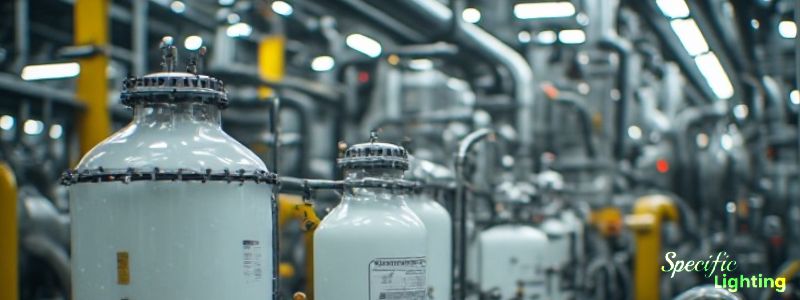
In many industrial facilities, lighting has to deal with much more than dust, heat, and moisture. Chemical plants, wastewater treatment facilities, fertilizer factories, and gas processing sites may contain corrosive gases that gradually attack metal surfaces, electrical contacts, protective coatings, and other fixture components. Gases such as chlorine (Cl₂), ammonia (NH₃), hydrogen sulfide (H₂S), and sulfur dioxide (SO₂) can create demanding conditions for ordinary industrial lights, particularly when humidity and condensation are also present.
That is where corrosion-resistant lighting comes in. Designed for use in chemically aggressive environments, these lighting fixtures combine suitable housing materials, protective finishes, sealed construction, and compatible electrical components to help maintain reliable performance over time. However, not every fixture marketed as corrosion-resistant can handle every chemical atmosphere. Choosing the right solution means understanding the gases present, how the lighting is constructed, and what the manufacturer can demonstrate through testing.
From chemical-resistant LED lights and specialized fixture designs to mixed-gas corrosion testing, industrial applications, and relevant safety standards, understanding these factors makes it easier to choose lighting that suits the demands of a particular facility.
Why Corrosion-Resistant Lighting Matters in Industrial Facilities
Reducing Premature Fixture Failure
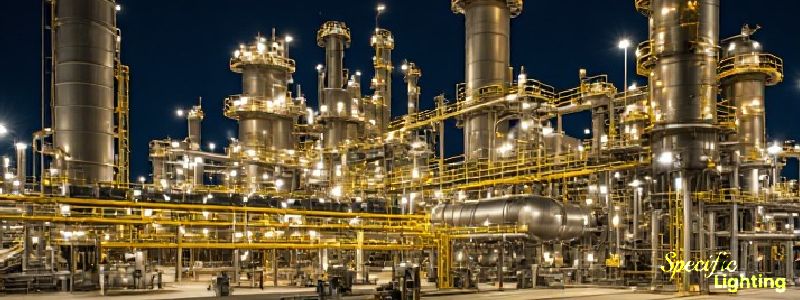
In chemically aggressive environments, ordinary lighting fixtures can develop problems long before their expected service life is reached. Protective coatings may blister or peel, metal fasteners may corrode, and electrical contacts may become contaminated or damaged. Elastomeric seals can also harden, swell, crack, or lose their sealing ability when exposed to incompatible chemicals.
These issues are not always obvious at first. A fixture may continue to illuminate normally even while its enclosure or electrical connections are gradually deteriorating. By the time flickering, moisture ingress, or a complete failure becomes apparent, the damage may already extend beyond the component that initially corroded.
Corrosion-resistant industrial lighting helps reduce these risks by using materials and protective systems suited to the surrounding atmosphere. When the fixture is properly selected and installed, it can maintain its structural integrity and electrical performance for longer than an unsuitable alternative.
The actual service life still depends on exposure conditions, manufacturing quality, maintenance practices, and installation details. A corrosion-resistant label alone does not guarantee a particular number of operating years.
Maintaining Safe and Consistent Illumination
Industrial lighting supports much more than general visibility. Operators rely on it to read instrument panels, monitor production lines, inspect pipework, identify leaks, and move safely around equipment. If lights fail unexpectedly or their output declines, routine work can become harder and less safe.
This is particularly relevant in chemical processing facilities, where workers may need to inspect valves, gauges, storage tanks, and transfer systems under demanding conditions. Reliable lighting also helps maintenance teams identify signs of equipment deterioration and carry out inspections with suitable visibility.
Corrosion-resistant luminaires can help maintain dependable illumination by reducing the likelihood of environmentally induced failures. Where the surrounding atmosphere presents a fire or explosion hazard, however, the fixtures must also meet the relevant hazardous-area requirements. Corrosion protection by itself does not make a light suitable for an explosive atmosphere.
Lowering Maintenance Costs and Production Downtime
Replacing a lighting fixture involves more than the price of a new product. Depending on the installation, maintenance teams may need access platforms, isolation procedures, replacement parts, and additional labor. Work in restricted or hazardous industrial areas can make the process even more demanding.
For a facility with hundreds of luminaires, repeated failures can quickly add up. Corrosion-resistant lighting may reduce the frequency of replacements and inspections prompted by chemical damage, helping lower the overall cost of maintaining the lighting system.
Consider a facility with 200 fixtures. If unsuitable lights require replacement more frequently than properly selected corrosion-resistant models, the difference in labor, access equipment, replacement products, and downtime can become substantial. The actual savings will depend on the failure rate and local operating costs, so a site-specific lifecycle comparison is more useful than a blanket percentage claim.
A higher initial purchase price can make sense when the fixture’s chemical compatibility is documented and its expected maintenance burden is lower. The goal is not simply to buy a more expensive light, but to choose a product that fits the environment and performs reliably over its intended service life.
How Does Corrosion-Resistant Lighting Work?
Protective Materials and Chemically Compatible Components
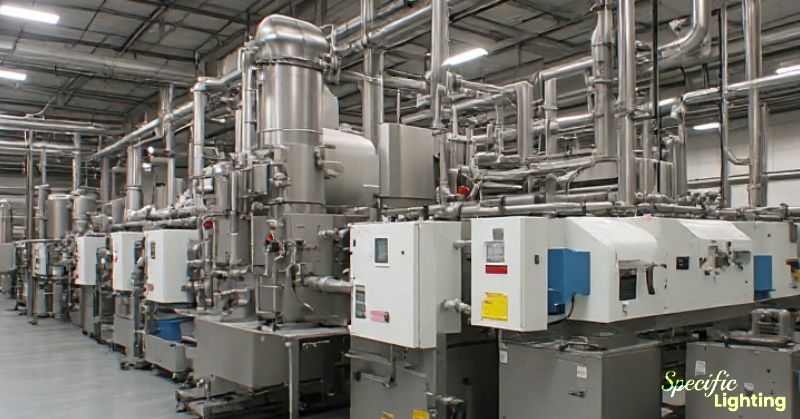
Corrosion-resistant lighting works by reducing the ways corrosive substances can damage the fixture. There is no single material or coating that solves every corrosion problem. Instead, manufacturers combine suitable materials, protective finishes, enclosure designs, and electrical components according to the intended operating environment.
The housing is often the first line of defense. Depending on the chemical exposure, a fixture may use coated aluminum, a suitable stainless steel grade, glass-reinforced polyester (GRP), fiber-reinforced plastic (FRP), or another engineered polymer. Each material has its own strengths and limitations.
Aluminum is relatively lightweight and transfers heat effectively, which makes it useful for LED luminaires. However, its suitability depends on the alloy, surface treatment, and chemical conditions. Stainless steel can offer good corrosion resistance in many environments, but its performance varies by grade and chemical exposure. Some chlorine-containing environments, particularly those involving moisture, can be highly aggressive toward stainless steel.
GRP and FRP enclosures can be attractive alternatives because they avoid some of the corrosion mechanisms associated with metals. Even so, the resin system, reinforcement, seals, and other components must be compatible with the chemicals present.
The best housing material is the one that has demonstrated suitable performance under the facility’s actual exposure conditions, not necessarily the most expensive or heaviest material available.
Anti-Corrosion Coatings and Surface Treatments
Protective coatings add another layer of defense by separating the underlying material from its surroundings. Industrial luminaires may use epoxy coatings, polyurethane finishes, powder coatings, anodized surfaces, or other treatments selected for the intended application.
Epoxy coatings are commonly used to protect metal surfaces, while polyurethane finishes can provide a useful combination of durability and resistance to environmental exposure. Powder coating can produce a durable finish when the coating formulation, preparation process, and application quality are appropriate.
However, coating performance depends on more than the product name. Surface preparation, coating thickness, curing, edge coverage, and resistance to the target chemicals all influence how well the finish performs. Scratches, damaged edges, poorly coated joints, and exposed mounting holes can become starting points for localized corrosion.
Anodizing can improve aluminum’s surface properties, but it should not be treated as universal protection against aggressive chemical gases. Certain chemical conditions can attack the anodized layer or the underlying aluminum.
For this reason, buyers should look for documented coating specifications and relevant test results. A statement such as “heavy-duty anti-corrosion coating” offers limited information unless the manufacturer explains what the coating is designed to withstand.
Sealed Enclosures, Gaskets, and Cable Entries
Even a well-protected housing can fail if corrosive substances enter through joints, cable entries, or damaged seals. This makes enclosure design an important part of corrosion-resistant lighting.
Gaskets and sealing rings are typically made from elastomeric or engineered polymer materials. Depending on the application, manufacturers may consider silicone, EPDM, fluoropolymers, or other compounds. None should be assumed suitable for every chemical. Compatibility depends on the precise formulation, exposure temperature, concentration, and duration.
Cable glands deserve the same attention as the main enclosure. A fixture may have a corrosion-resistant body but still use cable-entry hardware that degrades rapidly in the surrounding atmosphere. Mounting brackets, screws, washers, and connectors can create similar weak points.
A well-designed fixture accounts for these components as part of the complete assembly. During procurement, it is worth asking whether the stated corrosion-resistance testing covers the full luminaire or only selected housing materials.
Corrosion Protection for LED Drivers and Electrical Connections
LED technology is generally well suited to industrial lighting because it offers high energy efficiency and a long potential operating life. However, an LED luminaire contains more than LED chips. Drivers, printed circuit boards, terminals, connectors, and other electronic components can also be affected by corrosive atmospheres.
Corrosive contaminants may attack exposed conductive surfaces or contribute to deterioration of electrical contacts. Moisture can make the situation worse by creating conditions that encourage electrochemical reactions or allow contaminants to form conductive films.
Manufacturers can reduce these risks through suitable component selection, protected electrical assemblies, compatible coatings, appropriate enclosure design, and validated manufacturing processes. Conformal coatings on circuit boards may help protect against selected environmental contaminants, although their effectiveness depends on the coating material, application quality, and exposure conditions.
Thermal management matters, too. LED drivers and other electrical components generate heat during operation. A tightly sealed fixture must dissipate that heat without compromising its enclosure or protective systems.
A suitable corrosion-resistant LED fixture therefore needs to balance chemical protection, electrical reliability, and effective heat dissipation rather than focusing on the outer housing alone.
How Chlorine, Ammonia, and Other Corrosive Gases Affect Lighting
Different gases interact with materials in different ways, so understanding the specific atmosphere is a practical starting point when choosing a fixture.
Chlorine gas (Cl₂) is a strong oxidizing agent and can be particularly aggressive toward susceptible metals and components in moist conditions. Lighting used in chlorine production, chemical handling, or related process areas should be evaluated for the actual chlorine concentration and exposure scenario. A fixture suitable for a dry storage room may not be suitable for an area where chlorine leakage is possible.
Ammonia (NH₃) presents a different set of compatibility concerns. Its effects vary by material, concentration, temperature, and moisture conditions. Some copper-containing materials and certain other metals may be unsuitable in particular ammonia environments. Gaskets, plastics, coatings, and electrical components also need to be checked rather than assumed compatible.
Hydrogen sulfide (H₂S) can react with susceptible metals and contribute to sulfide-related corrosion. It is found in some wastewater, petroleum, and gas-processing operations. Sulfur dioxide (SO₂), meanwhile, can contribute to acidic conditions when moisture is present, increasing the risk of corrosion in vulnerable components.
Other atmospheres may contain nitrogen dioxide (NO₂), acidic vapors, alkaline contaminants, or mixtures of several gases. In real industrial settings, these mixtures can behave differently from individual chemicals tested in isolation.
That is why selecting a light based only on a general chemical-resistance label can be misleading. The more useful question is whether the complete fixture has demonstrated compatibility with the actual atmosphere in which it will operate.
Specialized Design Features of Our Corrosion-Resistant Lighting
Corrosion-resistant lighting needs to do more than provide reliable illumination. In facilities exposed to chlorine (Cl₂), ammonia (NH₃), hydrogen sulfide (H₂S), and other aggressive gases, the materials, protective finishes, enclosure structure, and electrical components all play a role in long-term performance.
Our corrosion-resistant lighting design focuses on these challenges by considering material compatibility, enclosure integrity, electrical protection, and practical installation requirements. The exact features and performance capabilities depend on the selected model, its configuration, and the supporting technical documentation.
| Design feature | Main purpose | Key consideration |
|---|---|---|
| Chemical-resistant housing | Helps protect the fixture from corrosive gases such as Cl₂, NH₃, H₂S, and SO₂ | Choose compatible materials and coatings for the actual exposure |
| Enhanced sealing | Helps prevent dust and moisture from entering the enclosure | Check gasket materials, cable entries, and IP rating |
| Protected electrical components | Reduces the risk of corrosion-related electrical failure | Evaluate connectors, terminals, and LED drivers |
| Thermal management | Controls heat to support stable LED performance | Consider ambient temperature and heat dissipation |
| Durable construction | Withstands demanding industrial operating conditions | Check fasteners, mounting brackets, vibration, and impact resistance |
| Customizable configurations | Adapts lighting to different chemical environments | Consider gas type, concentration, humidity, temperature, and mounting requirements |
| Quality testing and verification | Provides evidence of product performance | Review relevant corrosion tests, safety certifications, and technical documentation |
Chemical-Resistant Housing and Protective Surface Treatments
The luminaire housing is the first line of defense against corrosive substances. Our design approach focuses on selecting suitable housing materials and protective surface treatments according to the intended application. Depending on the product configuration, these may include corrosion-protective coatings, treated metal surfaces, or chemically compatible nonmetallic materials.
Rather than relying on the appearance of a coating alone, material selection should consider the gases present, their concentration, ambient humidity, and operating temperature. These factors help determine whether a housing and its surface finish are appropriate for the environment in which the light will be installed.
For facilities handling chlorine or ammonia, material compatibility deserves particular attention because performance can vary significantly between different alloys, polymers, and coating systems. Product selection should therefore be supported by relevant material data or exposure-test results rather than a broad claim of universal chemical resistance.
Enhanced Sealing to Help Protect Internal Components
Corrosive gases and airborne contaminants can affect more than the outside of a lighting fixture. If seals or cable entries deteriorate, contaminants may reach internal electrical components and increase the risk of premature failure.
Our design approach considers enclosure integrity, with attention to sealing interfaces, joints, cable entries, and other potential exposure points. Suitable gaskets and compatible cable-entry components help limit the ingress of dust and moisture where the specified enclosure rating applies.
The material used for each seal must also suit the chemical environment. Some elastomers perform well under certain conditions but may swell, harden, or lose their sealing properties when exposed to incompatible substances. For that reason, enclosure sealing and chemical compatibility should be evaluated together.
Corrosion Protection for Electrical Connections and LED Drivers
Electrical terminals, connectors, and LED drivers can be vulnerable to corrosive contaminants, especially when humidity or condensation is present. Damage to these components may lead to unstable operation, reduced reliability, or fixture failure.
Our engineering approach considers the protection of internal electrical assemblies alongside the outer housing. Depending on the model, relevant design measures may include protected electrical connections, suitable component materials, and protective treatments for electronic assemblies.
The goal is to reduce exposure-related deterioration while maintaining dependable electrical performance within the fixture’s specified operating conditions. Where a product is intended for a particularly aggressive atmosphere, test documentation should clarify whether the complete luminaire or only selected components have been evaluated.
Thermal Management for Reliable LED Performance
A corrosion-resistant luminaire must protect its components without creating excessive heat buildup. LED modules and drivers generate heat during operation, and sustained high temperatures can affect light output, electronic component life, and sealing materials.
Our lighting design takes thermal performance into account when selecting the housing structure, LED configuration, and driver arrangement. Appropriate heat dissipation helps maintain stable operation within the specified ambient temperature range.
This is particularly relevant in chemical processing buildings, industrial enclosures, and other locations where ventilation may be limited or ambient temperatures may fluctuate. Material compatibility should be checked at the expected operating temperature, since the chemical resistance of coatings and seals can change as temperatures rise.
Durable Construction for Demanding Industrial Applications
Industrial lighting may be exposed to vibration, accidental impact, frequent maintenance activity, humidity, and temperature changes in addition to corrosive gases. A durable fixture needs to account for these conditions across its entire structure, including mounting brackets, fasteners, end caps, and cable glands.
Our product design considers the demands of industrial installation and routine operation, with material and component choices matched to the intended application. The specified level of mechanical protection, environmental sealing, and chemical resistance depends on the selected model and its documented capabilities.
For customers operating in corrosive gas environments, these construction details help provide a clearer picture of how the luminaire is intended to perform beyond the basic lighting specifications.
Customizable Configurations for Different Chemical Environments
Not every industrial facility faces the same corrosion challenges. A chlorine-handling area may require a different material combination from an ammonia refrigeration room, wastewater treatment facility, or sulfur-containing gas processing plant.
We can evaluate application requirements such as the target gas, expected concentration, humidity, operating temperature, mounting arrangement, and required light output when determining a suitable configuration. Depending on product availability and engineering capability, customization may involve housing materials, protective finishes, mounting accessories, cable-entry arrangements, or optical performance.
Any customized configuration should be assessed for compatibility with the actual exposure conditions. Where necessary, supporting material data or appropriate corrosion-test results should be reviewed before the fixture is specified for service.
This application-based approach helps avoid the assumption that one fixture design will suit every corrosive environment. It also gives engineering and purchasing teams a more practical starting point when comparing lighting options for different areas of the same facility.
Quality Verification and Performance Validation
A well-designed corrosion-resistant light should be supported by specifications and evidence that match its intended use. Product evaluation may include checks of enclosure protection, electrical safety, thermal performance, material compatibility, and resistance to defined environmental exposures.
Where applicable, relevant standards and test methods can help verify individual aspects of performance. For example, IEC 60068-2-60 addresses mixed-gas corrosion testing, while IEC 60529 defines ingress protection classifications. These standards serve different purposes, and neither should be presented as proof of every type of chemical resistance.
Our approach emphasizes matching product claims to the available technical documentation, so customers can evaluate whether a particular luminaire is appropriate for their operating environment. Clear specifications also make it easier to compare models and identify any additional testing or certification needed for a particular installation.
Designed Around Real Industrial Operating Conditions
The performance of corrosion-resistant lighting depends on how well the product matches the environment in which it is used. By considering chemical exposure, enclosure integrity, electrical protection, thermal management, and installation requirements together, our design approach aims to provide lighting solutions for demanding industrial applications.
For facilities handling corrosive gases such as Cl₂, NH₃, H₂S, or SO₂, the final selection should be based on the actual exposure conditions and the verified capabilities of the chosen model. This approach helps customers make informed decisions about material compatibility, expected maintenance requirements, and long-term lighting reliability.
Common Corrosive Gases and Lighting Design Considerations
| Corrosive gas | Common environments | Material considerations | Sealing and protection considerations |
|---|---|---|---|
| Chlorine (Cl₂) | Chlor-alkali plants, water disinfection, chemical processing | Verify resistance of housing, coatings, fasteners, and seals to chlorine under actual exposure conditions | Use chemically compatible gaskets and cable glands; assess moisture and condensation risks |
| Ammonia (NH₃) | Fertilizer plants, ammonia refrigeration, chemical manufacturing | Check compatibility of metals, coatings, and polymers with ammonia and operating temperature | Select compatible seals and protect cable entries; consider condensation in refrigeration areas |
| Hydrogen sulfide (H₂S) | Oil and gas facilities, wastewater treatment, refineries | Evaluate corrosion resistance of metals and electrical contacts, especially in humid conditions | Protect electrical connections and enclosure joints against gas ingress and moisture |
| Sulfur dioxide (SO₂) | Pulp and paper mills, combustion facilities, chemical plants | Consider resistance to acidic corrosion, particularly when moisture is present | Use suitable enclosure seals and protect exposed connections from condensation |
| Hydrogen chloride (HCl) | Chemical plants, acid production, metal processing | Select materials and coatings compatible with hydrochloric acid exposure; verify fasteners and housing materials | Use chemically compatible gaskets and cable-entry components; consider acidic condensate |
| Nitrogen dioxide (NO₂) | Chemical manufacturing, fertilizer production, combustion systems | Assess material compatibility with oxidizing gases and potential acidic by-products | Protect joints and electrical components, particularly where moisture can form corrosive condensates |
| Hydrogen fluoride (HF) | Fluorochemical manufacturing, semiconductor processing | Carefully verify compatibility because HF can attack glass, silica-containing materials, and various metals | Confirm compatibility of seals, cable glands, lenses, and enclosure components with the specific exposure |
| Ozone (O₃) | Water treatment, disinfection systems, industrial oxidation | Check resistance of polymers, cable jackets, and elastomers to ozone-induced degradation | Select ozone-compatible seals and wiring insulation; inspect sealing components periodically |
Types of Corrosion-Resistant Lighting
LED High Bay Lights
High bay lights are commonly used in large industrial buildings with high ceilings, including chemical manufacturing halls, processing facilities, and warehouses. They provide concentrated, high-output illumination for spaces where mounting heights may reach several meters or more.
Corrosion-resistant LED high bays combine the optical performance of industrial LED lighting with construction intended for chemically aggressive conditions. Housing materials, protective coatings, seals, and mounting hardware should all suit the surrounding atmosphere.
When specifying a high bay, buyers should consider ceiling height, required illuminance, beam distribution, operating temperature, and chemical exposure. A high-output fixture is not automatically the best option if it creates glare, uneven illumination, or unnecessary energy consumption.
Linear LED Lights
Linear LED luminaires are often installed above production lines, along walkways, inside industrial buildings, and in process areas where a more even distribution of light is desirable.
Their elongated design can provide consistent illumination across work surfaces and access routes. Depending on the model, these fixtures may use metal housings, polymer enclosures, protective coatings, or sealed optical covers.
In chemical facilities, the end caps, joining points, cable entries, and mounting accessories deserve particular attention. A long enclosure may appear fully sealed from the outside, but the performance of its joints and seals still determines how well it withstands the environment.
High Temperature Lighting
High temperature lighting is designed for industrial environments where ambient temperatures or heat radiating from process equipment can exceed the operating limits of standard luminaires. In chemical plants, refineries, furnaces, boiler rooms, and thermal processing areas, these fixtures help maintain reliable illumination under demanding thermal conditions.
Corrosion-resistant high temperature luminaires combine heat-tolerant construction with materials and protective features suited to chemically aggressive environments. Depending on the application, they may incorporate specialized housings, heat-resistant seals, durable optical covers, and corrosion-resistant mounting hardware. Proper thermal management is also essential to protect internal components and maintain performance over time.
When specifying high temperature lighting, buyers should evaluate the maximum ambient temperature, surface temperatures near heat sources, chemical exposure, ingress protection requirements, and expected operating hours. The fixture’s rated temperature range must match the actual site conditions, as high temperature capability alone does not guarantee resistance to corrosive gases, vapors, or moisture. Selecting a luminaire designed for both thermal stress and chemical exposure helps improve service life, reduce maintenance requirements, and support safe industrial operations.
Vapor-Tight Lights
Vapor-tight lights are designed to restrict the entry of dust, moisture, and other contaminants under specified conditions. They are frequently used in wet industrial areas, utility rooms, food processing spaces, and other environments where ordinary open fixtures may be unsuitable.
However, vapor-tight construction does not automatically provide resistance to corrosive gases. A fixture can be tightly sealed against water while using a gasket, lens, or housing material that is vulnerable to a particular chemical.
When choosing vapor-tight lighting for a chemical plant, confirm both the required ingress protection rating and the documented chemical compatibility of the complete luminaire.
Explosion-Protected Lighting
Some chemical and gas-processing facilities contain flammable gases or vapors that can create an explosive atmosphere under certain conditions. In these areas, lighting may need to meet applicable explosion-protection requirements in addition to corrosion-resistance requirements.
Explosion-protected luminaires are designed and certified for defined hazardous-area conditions. Depending on the protection method and applicable certification scheme, their construction may control ignition risks through enclosure design, restricted energy, or other approved means.
The relevant gas group, area classification, equipment protection level, temperature class, and installation requirements must be established for the site. Corrosion resistance and explosion protection solve different problems, so neither should be used as a substitute for the other.
Floodlights and Area Lights
Floodlights are useful for illuminating outdoor process equipment, loading areas, tank farms, service roads, and industrial yards. In coastal and chemical-processing environments, they may face a combination of airborne chemicals, humidity, rain, sunlight, and temperature changes.
A suitable floodlight needs more than a durable body. The optical cover, mounting bracket, adjustment mechanism, cable gland, and fasteners should all be appropriate for the expected conditions.
Where salt-laden air and chemical gases occur together, product selection should account for both types of exposure rather than relying on a single environmental rating.
Emergency and Task Lighting
Emergency lighting helps maintain visibility when normal power or lighting systems fail. In a chemical facility, emergency luminaires may be installed along evacuation routes, near exits, or in designated operating areas.
These products must satisfy the relevant emergency-lighting requirements while also being compatible with their surroundings. Battery compartments, electrical connectors, seals, and charging electronics may need particular attention.
Task and portable lighting can be useful for maintenance and inspection work, but their suitability depends on where and how they will be used. Portable equipment intended for a potentially explosive atmosphere must meet the relevant requirements for that application.
Applications of Corrosion-Resistant Lighting
Chemical Manufacturing and Processing Plants
Chemical manufacturing facilities may expose lighting to a wide variety of aggressive substances, including chlorine, ammonia, acidic vapors, alkaline chemicals, and solvent-related contaminants. Conditions can differ significantly between production halls, storage rooms, mixing areas, and enclosed process spaces.
Corrosion-resistant luminaires are used to illuminate production lines, pipe racks, equipment platforms, maintenance areas, and chemical handling zones. In these locations, a fixture must match both the lighting design and the actual exposure conditions.
Facilities should assess normal operating conditions as well as credible abnormal events, such as leaks or releases, when determining the required equipment specifications. The appropriate design depends on the site’s process safety assessment rather than on the chemical plant label alone.
Chlorine Production and Chlor-Alkali Facilities
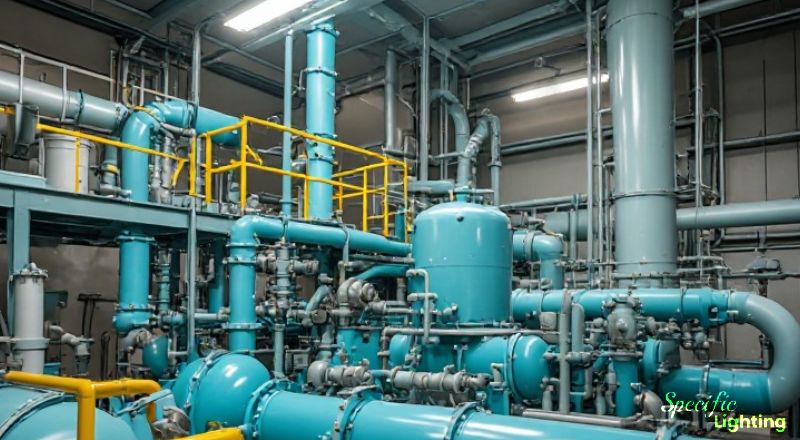
Chlorine production and handling facilities can present particularly demanding conditions for exposed equipment. Chlorine gas can attack susceptible materials, and moisture may increase the severity of corrosion.
Lighting in these facilities may be installed around process equipment, transfer systems, inspection platforms, and associated service buildings. The precise requirements depend on whether an area is exposed to routine low-level contamination, intermittent releases, or a credible higher-concentration exposure.
Manufacturers should be asked for evidence relating to the relevant chlorine exposure conditions. Generic salt spray results or an IP66 rating cannot independently establish suitability for chlorine gas.
Ammonia Refrigeration and Fertilizer Plants
Ammonia is widely used in industrial refrigeration and fertilizer manufacturing. Lighting requirements can vary between machinery rooms, production areas, storage locations, and outdoor process installations.
Ammonia-compatible lighting needs to account for the materials used throughout the luminaire, including metal components, protective coatings, gaskets, and electrical connections. The operating temperature may also affect material performance, particularly in refrigeration environments.
Where ammonia is present alongside flammable substances or other hazardous conditions, the equipment specification must address those risks separately. Ammonia exposure alone does not automatically mean that every installation requires explosion-protected lighting, but the site-specific hazard assessment must determine the appropriate classification.
Oil, Gas, and Petrochemical Facilities
Refineries, natural gas processing plants, and petrochemical facilities can contain hydrogen sulfide, sulfur compounds, process vapors, and other aggressive contaminants. Outdoor installations may also face rain, humidity, salt spray, and temperature fluctuations.
Corrosion-resistant LED lighting is commonly considered for process structures, equipment access platforms, pump areas, service corridors, and maintenance locations. The product needs to withstand the actual environment while providing the required illumination and electrical protection.
In classified hazardous locations, procurement teams should verify that the fixture’s approvals cover the intended installation. A corrosion-resistant enclosure without the required hazardous-area certification may be unsuitable for the location, regardless of its material quality.
Wastewater Treatment and Sewage Facilities
Wastewater treatment plants can contain hydrogen sulfide and other contaminants generated during the breakdown of organic material. These environments often combine corrosive gases with high humidity, condensation, and persistent moisture.
Lighting may be installed in pumping stations, screening rooms, treatment buildings, access tunnels, and maintenance areas. The choice of fixture depends on the gas exposure, water and dust ingress requirements, cleaning procedures, and local operating conditions.
Hydrogen sulfide exposure deserves particular attention because it can affect susceptible metals and electrical connections. Facilities should evaluate chemical compatibility alongside enclosure sealing and maintenance access when selecting replacement luminaires.
Pulp, Paper, Food, and Pharmaceutical Processing
Pulp and paper mills can expose equipment to bleaching chemicals, process vapors, and wet operating conditions. Food and pharmaceutical facilities may use aggressive cleaning and sanitation chemicals, while certain production areas involve frequent washdowns.
In these settings, a fixture may need to withstand repeated cleaning, elevated humidity, or contact with specific chemical residues. A product described as washdown-rated should not automatically be considered suitable for every cleaning agent or corrosive vapor.
Buyers should verify compatibility with the chemicals and cleaning methods actually used at the site. They should also consider cleanability, surface finish, ingress protection, and the effect of cleaning temperatures on seals and enclosure materials.
Marine, Coastal, and Offshore Environments
Marine and offshore installations face a combination of salt-laden air, humidity, wind-driven moisture, and sometimes chemical contaminants from nearby industrial operations. Salt deposits can contribute to corrosion, especially when moisture remains on exposed surfaces.
Corrosion-resistant luminaires are often considered for platforms, port facilities, shipboard industrial areas, and coastal processing sites. The chosen materials and protective finishes should be suitable for the specific marine exposure.
Salt spray resistance can provide useful information for these applications, but it should not be confused with mixed-gas corrosion resistance. Where corrosive gases are also present, additional compatibility evidence may be needed.
Key Specifications of Corrosion-Resistant Lighting
Chemical Compatibility and Corrosion Resistance
The first specification to examine is the fixture’s demonstrated compatibility with the surrounding chemicals. Rather than relying on broad terms such as industrial grade or heavy duty, buyers should identify the actual gases, concentrations, humidity levels, and temperatures expected at the installation site.
For example, a luminaire intended for an area containing low concentrations of a corrosive contaminant may not be suitable for a location where the gas is continuously present at a higher concentration. Exposure duration matters as well. Occasional exposure during maintenance can create different demands from continuous operation in a contaminated atmosphere.
Manufacturers should ideally provide material compatibility information and test documentation for the complete product or clearly identify which components were evaluated. Test conditions should be relevant to the intended use, and any limitations should be stated openly.
IP65, IP66, and IP67 Ingress Protection Ratings
Ingress protection ratings describe how well an enclosure protects against the entry of solid particles and water under defined test conditions. They are useful when selecting lighting for dusty, wet, or washdown environments, but they do not measure general resistance to corrosive gases.
An IP65-rated fixture provides dust-tight protection and resistance to water jets under the applicable test conditions. IP66 covers dust-tight protection and more powerful water jets. IP67 addresses dust-tight protection and temporary immersion under specified conditions.
The correct rating depends on the installation. A fixture exposed to routine water jets may require a different level of protection from one installed in a dry process room with corrosive airborne chemicals.
IP ratings and chemical-resistance evidence should be assessed separately. A high IP rating does not prove that the enclosure material, gasket, or cable gland can withstand Cl₂, NH₃, H₂S, or SO₂.
Housing Materials, Coatings, and Fasteners
Housing specifications should identify the material or alloy, the protective finish, and any relevant limitations for chemical exposure. If the product uses a coated metal enclosure, buyers should ask about the coating system, surface preparation, and evidence supporting its suitability for the target environment.
Stainless steel grades should not be treated as interchangeable. Different grades have different corrosion behavior, and even a grade with good general resistance may perform poorly in a particular chemical environment. Aluminum and engineered polymers also require application-specific assessment.
Fasteners, brackets, hinges, and mounting accessories should receive the same scrutiny as the main body. Dissimilar metals in contact can introduce galvanic corrosion risks under suitable conditions, especially when a conductive liquid or moisture is present.
A useful product specification describes the construction of the entire assembly rather than highlighting only the outer housing.
Luminous Output, Efficiency, and Color Quality
Chemical resistance does not remove the need for sound lighting design. The fixture still has to deliver sufficient illumination for the task, whether it is lighting a process floor, an equipment platform, or a maintenance corridor.
Luminous flux, measured in lumens, indicates the total visible light output. Luminous efficacy, measured in lumens per watt, indicates how efficiently the fixture converts electrical power into visible light. Correlated color temperature (CCT) describes the apparent warmth or coolness of the light, while the color rendering index (CRI) indicates how faithfully colors are rendered under the relevant measurement method.
For example, a 100-watt LED luminaire producing 15,000 lumens has a nominal luminous efficacy of 150 lumens per watt. That figure can help compare products, although optical losses, operating temperature, driver efficiency, and actual installed performance also matter.
Lighting designers should assess the required illuminance in lux, mounting height, beam angle, uniformity, and glare. The appropriate target depends on the activity and applicable lighting guidance, not simply on the fixture’s wattage.
Ambient Temperature and Thermal Management
Industrial lighting may operate in hot process buildings, cold refrigeration rooms, or outdoor locations with substantial temperature swings. These conditions can affect LED performance, driver reliability, gasket behavior, and coating durability.
A fixture’s specified ambient temperature range should cover the expected operating conditions. Buyers should also consider the temperature near the mounting location, which may differ from the general room temperature because of nearby equipment or process heat.
Thermal management is particularly relevant for enclosed LED fixtures. Although LEDs are efficient, their components still generate heat. If that heat cannot be dissipated adequately, the LED output and driver service life may be affected.
Chemical compatibility should therefore be evaluated alongside thermal performance. A seal that performs well at room temperature may behave differently at an elevated operating temperature, and a coating’s chemical resistance may also change with temperature.
Mechanical Protection, Installation, and Service Life
Industrial luminaires may be exposed to vibration, accidental impact, and mechanical stress during installation or maintenance. An IK rating, where applicable, describes the enclosure’s resistance to mechanical impact under defined test conditions. Like an IP rating, it addresses a specific property rather than overall environmental suitability.
Mounting methods, fixture weight, cable-entry arrangements, and available replacement components can all affect long-term performance. In chemically aggressive locations, the mounting hardware needs to be compatible with the atmosphere and the supporting structure.
LED lifetime figures should also be interpreted carefully. A stated lifetime such as L70 of 50,000 hours generally refers to the time associated with the LED’s light output declining to 70% of its initial value under the stated measurement conditions. It does not automatically mean that the complete fixture, including its seals and driver, will operate for 50,000 hours in a corrosive atmosphere.
For that reason, buyers should review the manufacturer’s lifetime assumptions, warranty exclusions, operating temperature limits, and maintenance recommendations before making a purchase decision.
Standards and Testing Methods for Corrosion-Resistant Lighting
IEC 60068-2-60 – Mixed-Gas Corrosion Testing
IEC 60068-2-60 is particularly relevant when evaluating the effects of corrosive gases on electrical and electronic equipment. It addresses testing under flowing mixed-gas atmospheres, which can help assess the susceptibility of components and assemblies to corrosion-related degradation.
The method is useful because industrial environments do not always expose equipment to a single contaminant. Electrical contacts, connectors, and other components may encounter combinations of corrosive gases and humidity, creating conditions that differ from those in a simple salt spray test.
When reviewing a test report, buyers should examine the method used, the specified gases, concentrations, temperature, humidity, exposure duration, and acceptance criteria. They should also check whether the tested specimen was an individual material, an electronic component, or a complete luminaire.
A report showing that one component passed a mixed-gas test does not automatically establish that the entire lighting fixture is suitable for the same atmosphere. The scope of the test matters just as much as the name of the standard.
ISO 9227 – Salt Spray Corrosion Testing
ISO 9227 specifies salt spray testing methods used to evaluate the corrosion behavior of metallic materials with or without protective coatings. Common methods include neutral salt spray testing and other defined salt spray procedures.
These tests can be useful for comparing certain coatings, finishes, and metal specimens under controlled conditions. They are particularly relevant when lighting is intended for coastal, marine, or salt-contaminated environments.
However, salt spray testing is not a universal predictor of real-world service life. Results obtained under accelerated laboratory conditions do not necessarily translate directly into a particular number of years in service.
More importantly for chemical facilities, passing a salt spray test does not prove resistance to chlorine gas, ammonia vapor, or hydrogen sulfide. These substances have different chemical interactions with materials, so additional evidence may be needed.
IEC 60529 – Ingress Protection
IEC 60529 defines the IP classification system used to describe protection provided by electrical enclosures against the entry of solid objects, dust, and water.
For industrial lighting, it helps buyers compare enclosure performance in environments where dust, moisture, or water jets are concerns. A fixture with an appropriate IP rating may be suitable for a particular washdown or outdoor application, provided its other requirements are also met.
The limitation is straightforward – IEC 60529 is not a general corrosion-resistance standard. It does not establish whether a coating, housing alloy, gasket, or electrical contact can withstand a particular corrosive gas.
The IP rating should therefore appear alongside, rather than in place of, chemical compatibility information in a product specification.
IEC 60598 – Luminaire Safety Requirements
The IEC 60598 series addresses safety requirements for luminaires. IEC 60598-1 covers general requirements and tests, while relevant particular requirements apply to specific luminaire types and applications.
These requirements address aspects of luminaire construction and safety, including applicable electrical and mechanical considerations. They provide a useful basis for assessing whether a product meets the relevant luminaire safety requirements.
However, compliance with an applicable IEC 60598 requirement does not automatically establish corrosion resistance in a specific chemical atmosphere. A fixture may meet luminaire safety requirements while still needing separate evaluation of its materials and performance under corrosive exposure.
IEC 60079 and UL 844 – Hazardous-Area Lighting
Where a facility contains potentially explosive gas or vapor atmospheres, equipment may need to comply with the applicable hazardous-area requirements. The IEC 60079 series addresses equipment and protection concepts for explosive atmospheres, with different parts covering specific subjects.
In North American installations, UL 844 may be relevant to lighting equipment intended for applicable hazardous locations. The precise requirements depend on the jurisdiction, classification, installation, and applicable certification scheme.
These standards address ignition risks and the suitability of equipment for defined hazardous conditions. They should not be mistaken for general chemical-resistance standards.
A fixture may require both hazardous-area certification and corrosion-resistance evidence. Conversely, a location containing a corrosive gas does not automatically require explosion-protected lighting unless the applicable hazard assessment and regulations establish that need.
ASTM Methods and Manufacturer-Specific Chemical Testing
ASTM publishes various test methods for evaluating corrosion, coatings, materials, and environmental performance. The relevant method depends on the property being assessed, the specimen, and the intended application.
For example, a coating test may help evaluate resistance to a particular form of degradation, while a material compatibility test may focus on changes in appearance, mass, strength, or other properties after chemical exposure.
Manufacturer-specific tests can also be useful when the actual application involves chlorine, ammonia, hydrogen sulfide, sulfur dioxide, or a mixture of gases. Such testing should have clearly defined conditions and measurable acceptance criteria.
When comparing reports, it is worth asking whether the tested fixture was new, whether its seals and electrical accessories were included, and whether electrical or photometric performance was checked after exposure. Visual inspection alone may not reveal every form of electrical degradation.
Cost of Corrosion-Resistant Lighting
The cost of corrosion-resistant lighting depends on the fixture type, chemical exposure, housing materials, and installation requirements. Lights designed for environments containing chlorine (Cl₂), ammonia (NH₃), hydrogen sulfide (H₂S), or other corrosive gases may require specialized enclosures, seals, and electrical components. When planning a project, buyers should consider not only the purchase price but also installation, electricity, maintenance, and replacement costs.
| Cost item | Estimated cost |
|---|---|
| Standard corrosion-resistant LED light | $50–$300 per unit |
| Specialized chemical-resistant or hazardous-area light | $200–$800+ per unit |
| Installation labor | $30–$300+ per fixture |
| Annual electricity cost | $7,200 for 100 × 100 W lights |
| Potential annual energy savings | $1,440 with an equivalent 8 kW system |
| Example initial project cost | $21,000 for 100 lights, including installation |
| Example five-year total | $57,000, including initial cost and electricity |
How Much Does a Corrosion-Resistant Light Cost?
As a preliminary budgeting guide, corrosion-resistant LED fixtures may range from approximately $50 to $300 per unit for some standard industrial applications. Specialized fixtures designed for more demanding chemical environments or certified hazardous locations can cost $200 to $800 or more per unit. Actual prices vary considerably by specification, supplier, order quantity, and certification requirements.
For example, purchasing 100 fixtures at $150 each would result in an initial equipment cost of $15,000, excluding installation and accessories. Buyers should compare chemical compatibility, rated wattage, light output, ingress protection, warranty, and testing documentation rather than selecting a fixture based on price alone.
Installation Costs
Installation costs depend on mounting height, wiring, accessibility, and the need for specialized equipment. A straightforward replacement may cost around $30 to $100 per fixture in labor, while installations involving high ceilings, difficult access, or hazardous-area procedures may cost $100 to $300 or more per fixture. These are broad planning estimates, not standard labor rates.
For 100 fixtures, installation at $60 per unit would add $6,000 to the project. Cable glands, mounting brackets, wiring, access platforms, and commissioning may increase the total. Request an itemized quotation to understand which expenses are included.
Electricity Consumption and Running Costs
Electricity is an ongoing expense, making energy efficiency worth considering. Annual consumption can be estimated using this formula:
Annual electricity use (kWh) = Total power (kW) × Operating hours per year
For example, 100 LED fixtures rated at 100 W each create a connected load of 10 kW. Operating them for 16 hours per day over 300 days produces annual consumption of 48,000 kWh. At $0.15 per kWh, the annual electricity cost is $7,200.
If an alternative lighting design reduces the total connected load from 10 kW to 8 kW while delivering the required illumination, annual consumption falls to 38,400 kWh. The resulting electricity cost would be $5,760, saving $1,440 per year, assuming the same operating schedule and electricity rate.
Maintenance and Replacement Costs
Corrosive gases can damage unsuitable housings, fasteners, seals, and electrical connections, increasing repair frequency. Maintenance expenses may include technician labor, replacement parts, access equipment, and production interruptions.
For budgeting, a facility might provisionally allocate 1% to 3% of the initial lighting equipment cost annually for routine maintenance, then adjust the figure using actual service records. This is a planning assumption rather than a universal industry benchmark. Fixtures exposed to severe chemical conditions may require a different allowance.
Replacement costs also include labor and access equipment, not just the price of a new light. Choosing materials and seals compatible with the actual gases present can help reduce avoidable failures, although no fixture is maintenance-free.
Total Cost of Ownership
Total cost of ownership combines the initial purchase, installation, electricity, maintenance, and replacement expenses over a defined period. Consider 100 fixtures costing $150 each, with installation at $60 per fixture. The initial project cost is $21,000.
If the system consumes 48,000 kWh annually at $0.15 per kWh, five years of electricity would cost $36,000, bringing the subtotal to $57,000 before maintenance and replacement. A more energy-efficient system or one requiring fewer repairs could reduce lifetime expenses, depending on its purchase price and actual performance.
How to Budget for a Lighting Project
Start by identifying the gases present, operating temperature, humidity, and any hazardous-area requirements. Obtain quotations that specify fixture prices, installation, energy consumption, warranty, and chemical-compatibility evidence. Then compare options using the same operating hours, electricity tariff, and evaluation period.
A slightly higher initial investment may deliver better long-term value when the fixture is properly designed for the environment. The best purchasing decision balances upfront cost with reliable performance, manageable maintenance, and predictable operating expenses.
Frequently Asked Questions About Corrosion-Resistant Lighting
Can LED Lights Withstand Chlorine Gas (Cl₂)?
Some LED luminaires can be designed for specified chlorine-containing environments, but suitability depends on the concentration, humidity, temperature, exposure duration, and materials used throughout the fixture. Chlorine can attack susceptible materials, particularly under moist conditions, so a generic corrosion-resistant label is not enough to establish compatibility.
Look for manufacturer documentation or test reports that address the relevant chlorine exposure conditions. Where the concentration or exposure scenario is uncertain, the facility should obtain a suitable environmental assessment before selecting equipment.
Are There LED Lights Suitable for Ammonia (NH₃) Environments?
Yes, certain LED fixtures may be suitable for defined ammonia environments when their housing, coatings, seals, and electrical components are compatible with the expected exposure. However, material selection needs to be based on the actual operating conditions.
Ammonia refrigeration rooms and fertilizer production areas can have different temperature, humidity, and exposure profiles. Buyers should confirm the product’s intended application and avoid assuming that a fixture suitable for one ammonia-related installation will automatically suit another.
Does IP66 Mean a Light Fixture Is Corrosion-Resistant?
No. IP66 indicates dust-tight protection and resistance to powerful water jets under specified test conditions. It does not establish resistance to chlorine, ammonia, hydrogen sulfide, or other corrosive gases.
A fixture may need IP66 protection and verified chemical compatibility at the same time. These specifications address different environmental challenges and should be evaluated separately.
What Is the Best Material for Corrosion-Resistant Lighting?
There is no single material that is best for every corrosive environment. Coated aluminum, selected stainless steel grades, GRP, FRP, and engineered polymers can all be suitable in particular applications, depending on the chemicals and operating conditions.
The decision should also account for the lens, gaskets, fasteners, cable glands, and internal electrical components. Manufacturer test data and chemical compatibility information provide a stronger basis for selection than material names alone.
Which Standard Tests Corrosion Resistance in Mixed-Gas Environments?
IEC 60068-2-60 addresses testing under flowing mixed-gas corrosive atmospheres and is relevant to evaluating electrical and electronic components. Its applicability to a complete lighting product depends on the test scope and specimen.
ISO 9227, by comparison, covers salt spray testing. It can help evaluate certain corrosion-related properties but does not independently establish resistance to specific corrosive gases.
Does Corrosion-Resistant Lighting Need Explosion-Proof Certification?
Not always. Corrosion resistance concerns material durability, while explosion protection addresses ignition risks in potentially explosive atmospheres.
A facility containing corrosive gas may or may not have an explosive-atmosphere hazard, depending on the gas properties, concentration, operating conditions, and applicable classification. The site assessment determines whether hazardous-area-certified lighting is required.
How Long Does Corrosion-Resistant LED Lighting Last?
Service life depends on the LED system, driver quality, operating temperature, chemical exposure, installation, and maintenance. A stated LED lifetime of 50,000 hours, for example, does not guarantee that every component of the fixture will last that long in a corrosive atmosphere.
Ask the manufacturer for information about LED lumen maintenance, driver life, chemical exposure limitations, and warranty coverage. These details offer a more realistic view of expected service life than a single lifetime figure.
Choosing Lighting That Can Handle the Environment
Choosing the right corrosion-resistant lighting requires a clear understanding of your operating environment, including the types of corrosive gases present, humidity, temperature, and required protection level. The right combination of housing materials, protective coatings, sealing systems, and electrical components helps maintain reliable lighting performance and reduce corrosion-related maintenance.
Because every industrial environment has different requirements, a standard fixture may not always provide the best solution. Contact us to discuss your application and explore customized corrosion-resistant lighting solutions designed to meet your specific chemical exposure conditions, installation requirements, and lighting needs. Our team can help you identify a suitable configuration for your facility.