Stadium lighting can make a huge difference to a sports facility. It gives athletes more time to practice, allows games to continue after sunset, and helps schools and community sports organizations make better use of their fields. The problem? A proper lighting system can cost tens of thousands of dollars, and larger stadium projects can easily run into several hundred thousand dollars. For many schools, youth leagues, and local sports clubs, paying for everything out of pocket simply is not realistic.
That is where stadium lighting grants can help. Depending on the program, eligible organizations may be able to secure funding for new LED floodlights, replace outdated equipment, improve existing electrical infrastructure, or expand access to sports facilities. Some opportunities focus specifically on youth sports, while others support public recreation, community development, or energy efficiency.
The good news is that funding does not always have to come from a single source. A school district might combine a local capital improvement grant with an energy-efficiency rebate, while a youth baseball organization could explore community foundation funding and corporate sponsorships. The trick is knowing which programs fit the project, how much money to request, and how to put together an application that funders can take seriously.
Which Sports Facilities Can Qualify for Stadium Lighting Grants?
Stadium lighting funding is not limited to professional sports venues or large college stadiums. Community recreation facilities, school athletic fields, and youth sports complexes may also find suitable opportunities, particularly when their projects improve access to sports and serve a broad group of local residents.
The most suitable funding route often depends on the sport, the facility’s ownership, and the organization’s legal status. A public school district may have access to government capital programs that are unavailable to a privately operated club. Likewise, a youth baseball organization may be eligible for a sport-specific grant that would not suit a football stadium.
Baseball and Softball Field
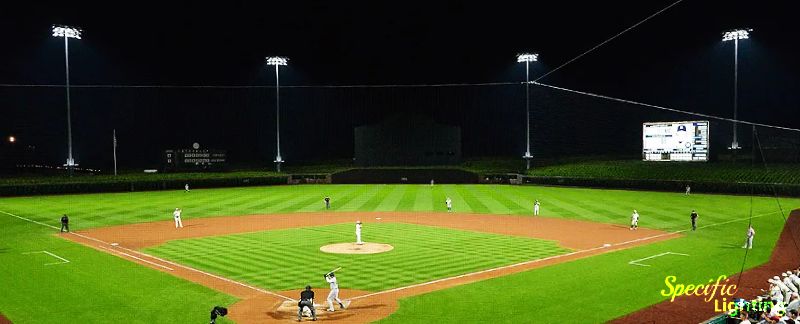
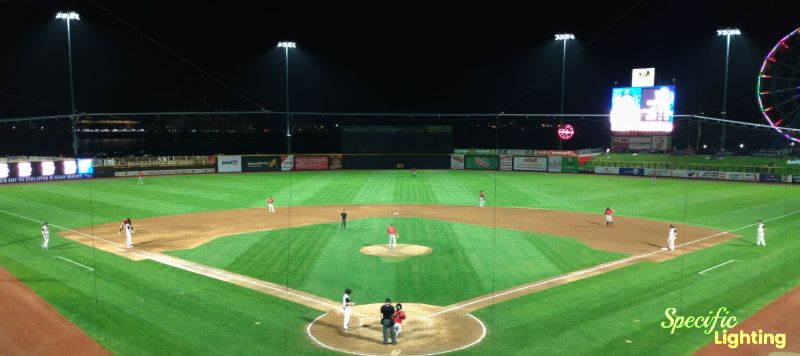
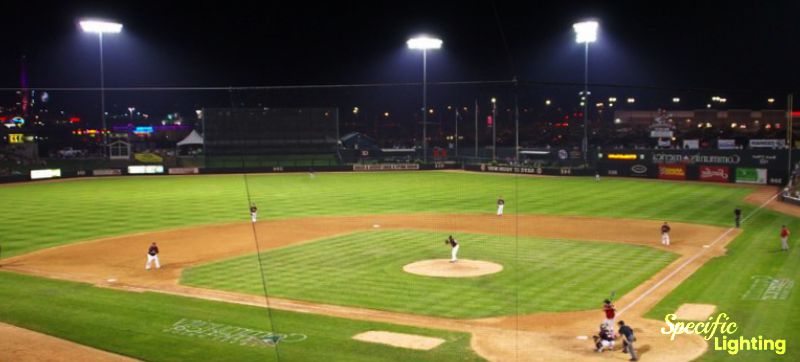
Baseball and softball facilities have some unique lighting requirements. Unlike a rectangular field, a diamond has several distinct playing areas, including the infield, outfield, foul territory, and areas around the bases. Baseball also involves high-flying balls that players must track against the sky, making appropriate light distribution and glare control particularly relevant.
Potential applicants include Little League organizations, youth softball associations, school districts, municipal parks departments, and community baseball complexes. Multi-field facilities may have an especially strong case when lighting improvements allow several teams to practice and play during the same evening.
A smaller recreational diamond may require a different lighting design from a high school varsity field or a regional tournament venue. The project budget should reflect the intended level of play, the required illumination, and the condition of the existing infrastructure.
For a new LED baseball lighting system, recent U.S. industry estimates place many projects in the approximate range of $209,000 to $654,000, although smaller fields, simpler installations, and unusual site conditions can produce different results. A retrofit using existing poles and suitable electrical infrastructure may cost considerably less. These figures are planning references rather than grant award amounts, and a site-specific quotation is needed before requesting funding.
Softball facilities can also explore funding for new lighting or LED conversions. A smaller youth diamond may have a lower overall project cost than a large baseball stadium, but the savings depend on field dimensions, lighting requirements, pole locations, and infrastructure needs.
Organizations should explain how the improvements will benefit their programs. A youth league that currently has to schedule all games during daylight hours may be able to show how evening access would accommodate additional teams, reduce scheduling conflicts, and provide more opportunities for young athletes.
American Football Stadium
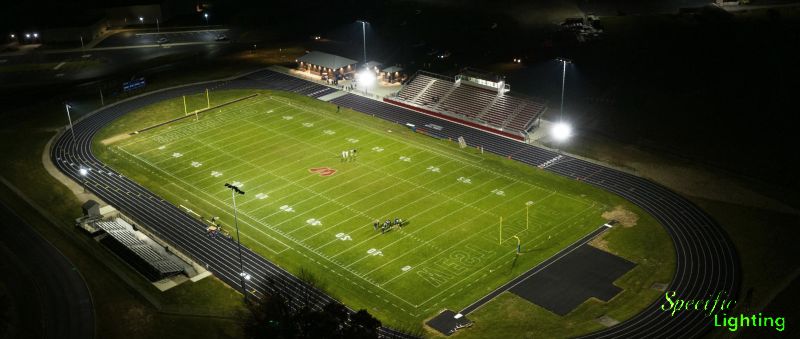
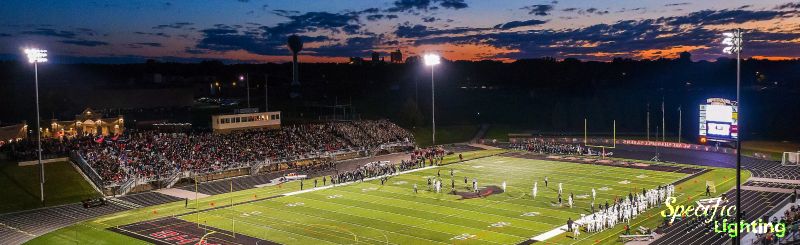
Football stadiums often need substantial lighting infrastructure because the playing area is large and the system must provide suitable visibility across the field. High school venues may also serve marching bands, track meets, community events, and other activities, making shared use a useful part of the funding proposal.
Eligible applicants may include public school districts, youth football associations, municipalities, parks departments, and nonprofit organizations operating community athletic facilities. Whether a private school or independently operated stadium can apply depends on the specific program.
A football lighting project might involve replacing older metal-halide fixtures with LEDs, installing new floodlights, upgrading electrical distribution, or improving lighting controls. If the existing poles and foundations are structurally sound, reusing them may help reduce the total cost. However, a professional assessment is needed before assuming that existing infrastructure can remain in place.
Recent industry estimates for LED football field projects vary widely, with new installations often costing hundreds of thousands of dollars. One published 2026 industry estimate places conventional football field projects at approximately $222,000 to $877,000, while a retrofit may be less expensive when existing infrastructure can be reused. Smaller community facilities may fall outside this range, and larger or more demanding venues can require additional investment.
The strongest applications connect the proposed lighting work to measurable community benefits. For example, a school district might explain how an upgrade would improve field availability for several teams, reduce maintenance demands, and lower electricity consumption. A youth football organization could highlight increased access to evening practice sessions and the ability to share the field with other community programs.
Soccer Field
Soccer fields are used by a wide range of organizations, from small recreational leagues to competitive school teams and regional clubs. Lighting can make a particularly noticeable difference in communities where teams have limited access to fields during daylight hours.
Potential funding sources include municipal recreation grants, youth sports foundations, school facility programs, and energy-efficiency initiatives. Projects that serve several age groups or provide affordable access to underserved communities may be well suited to programs focused on participation and public benefit.
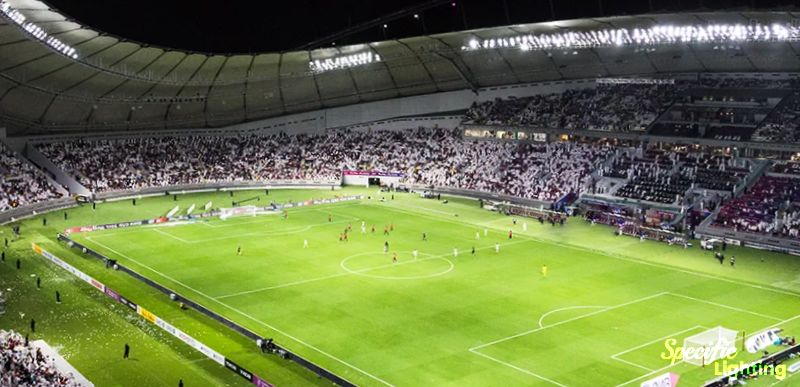
A full-size soccer field generally requires a carefully designed lighting layout to achieve consistent illumination across the playing surface. Pole placement, mounting height, fixture output, glare, and light spill all affect the final design. A training field may need a different system from a venue hosting competitive matches.
Recent project estimates for soccer field LED installations range from roughly $150,000 for some smaller or simpler facilities to more than $300,000 for larger projects with greater infrastructure requirements. The actual cost depends on the field’s size, competition level, electrical readiness, and local construction prices.
For grant applications, clubs should explain how many players will use the field, whether the facility will be available to other organizations, and how the lighting system will be maintained. If the project also improves access for girls’ teams, adaptive sports programs, or low-income families, those outcomes may align with the goals of certain funders.
Track and Field Stadium
Track and field facilities may serve school athletics, community running clubs, youth training programs, and regional competitions. Lighting improvements can extend the hours available for training and make it easier to schedule events around school, work, and other commitments.
The cost depends on whether the project covers an entire stadium, a running track, a field-event area, or a combination of facilities. A track surrounding a football field may share some lighting infrastructure, but the design must still account for the needs of different activities.
School districts and municipalities can investigate public recreation funding, school capital improvement programs, and grants supporting multi-use athletic facilities. A proposal should explain how the project will benefit the full range of users rather than focusing exclusively on one team.
Other Sports and Multi-Sport Facilities
Lighting grants may also be relevant to lacrosse, field hockey, rugby, cricket, outdoor basketball, tennis, and other sports played after sunset. The available funding will depend on the specific program, and some opportunities may be restricted to particular sports or types of facilities.
Multi-sport complexes have an advantage when they can demonstrate broad community use. A single lighting project may support several youth leagues, school programs, recreational activities, and local events. This can help an applicant explain the value of the investment, particularly when a grant prioritizes public access or youth participation.
However, sharing a field does not automatically mean one lighting design will work for every sport. The project team should identify the activities that will use the facility and confirm that the proposed system meets the relevant lighting requirements.
How Much Can Stadium Lighting Grants Cover?
The amount available through stadium lighting grants varies considerably. Some programs provide small awards for community improvements, while others contribute equipment, infrastructure, or substantial funding toward major recreational projects.
It is helpful to separate three figures – the total cost of the lighting project, the maximum grant award, and the amount the applicant can realistically receive. A program might advertise a $100,000 maximum award, for example, but an organization could receive less depending on the eligible expenses, available funding, and quality of its application.
Typical Grant Amounts and Funding Structures
Stadium lighting funding can come in several forms. A conventional cash grant gives the organization money to spend on approved expenses. A matching grant requires the recipient to contribute an agreed share of the cost. An in-kind award may provide lighting equipment, installation support, or other services instead of cash.
The following table shows how these arrangements can differ.
| Funding type | Illustrative value | What it means |
|---|---|---|
| Small community grant | $5,000 to $25,000 | May help cover assessments, controls, or part of an upgrade |
| Mid-sized project grant | $25,000 to $100,000 | May contribute toward a larger lighting installation |
| Major facility grant | $100,000 or more | May support eligible capital improvements under a suitable program |
| In-kind equipment award | $50,000 to $100,000 | May provide equipment or infrastructure instead of unrestricted cash |
| Utility rebate | Depends on the program | May reduce the cost of qualifying energy-efficient equipment |
These ranges are examples for understanding different funding structures, not a promise that stadium lighting grants are generally available at these amounts. Actual award limits must be checked against each program’s current guidelines.
Can a Grant Cover 100% of Stadium Lighting Costs?
Full funding is possible under some programs or through a combination of eligible contributions, but it should not be treated as the normal outcome. Many grants cover only part of a project’s cost, impose maximum award limits, or require the applicant to demonstrate that the remaining funding is available.
Consider a school planning a $250,000 LED lighting project. If a grant covers 40% of the eligible expenses, the award would be $100,000, leaving $150,000 to be funded through other sources. The school might use its capital budget, seek a second eligible grant, obtain an energy rebate, or organize a fundraising campaign.
Before combining funding sources, the school should check whether the programs permit the same project to receive support from multiple funders. Some funders restrict the use of other grants as matching contributions, while others prohibit double reimbursement for the same expense.
A sensible funding plan identifies the amount requested from each source, the expenses assigned to it, and the deadline for confirming the contribution. This helps prevent a situation in which a project receives one award but cannot proceed because the remaining funds never materialize.
Estimating the Remaining Cost After a Grant
The table below shows how different grant contributions affect the amount an organization needs to fund itself.
| Total project cost | Grant contribution | Remaining cost |
|---|---|---|
| $100,000 | $25,000 | $75,000 |
| $250,000 | $100,000 | $150,000 |
| $400,000 | $200,000 | $200,000 |
| $500,000 | $300,000 | $200,000 |
These examples assume that the grant amounts are approved and that the entire contribution can be applied to the project. Real applications may be subject to eligible-cost limits, matching rules, and reimbursement conditions.
What Determines the Amount You Can Receive?
The size of the facility is only one factor. A smaller project may receive a substantial award if it meets a program’s goals, while a larger project may be unsuitable because the applicant falls outside the eligible area or organization type.
Funders may consider the number of athletes served, the extent of community access, the condition of the existing facility, the project’s readiness, and the organization’s ability to maintain the system. Energy savings may also be relevant when a program supports efficiency improvements.
The requested amount should be based on a realistic budget rather than the maximum advertised award. If the project costs $180,000 and the funder permits a request of up to $75,000, asking for $75,000 may make sense if the organization has a credible plan for covering the remaining $105,000.
It is also worth checking whether the funder pays a fixed award or a percentage of eligible expenses. A grant offering 50% of eligible costs does not necessarily pay half of every item on a contractor’s quotation. Expenses such as unrelated electrical work, landscaping, or stadium improvements may be excluded.
How Much Does Stadium Lighting Cost?
Before applying for funding, organizations need a reasonable estimate of the total project cost. Without one, it is difficult to decide how much to request, calculate matching funds, or demonstrate that the project is financially realistic.
Lighting prices vary because no two athletic facilities are exactly alike. A field with existing poles, suitable foundations, and adequate electrical capacity may be much less expensive to upgrade than an unlit facility requiring new construction. Competition level also matters because higher-performance venues can require more demanding lighting designs.
LED Stadium Lighting Costs by Sport
The following figures provide broad planning references for U.S. projects. They are not standardized prices, and they should not be used as a substitute for an actual site assessment and contractor quotation.
| Facility type | Illustrative LED project cost |
|---|---|
| Football field | $220,000 to $880,000 |
| Baseball field | $209,000 to $655,000 |
| Softball field | $135,000 to $350,000 |
| Soccer field | $150,000 to $345,000 |
| Smaller recreational facility | May cost substantially less, depending on scope |
These ranges draw on published industry estimates for different field sizes and project types. Football and baseball facilities can have particularly wide cost ranges because of differences in required light levels, pole arrangements, and infrastructure. The figures may overlap, and a small youth field can cost less than a larger or more technically demanding facility of the same sport.
When comparing quotations, organizations should check what each estimate includes. One contractor might quote only the fixtures, while another includes poles, electrical work, controls, installation, and commissioning. A lower headline price is not necessarily the lower total project cost.
New Installation vs. LED Retrofit
A new lighting installation usually involves more work than replacing existing fixtures. Depending on the site, the project may require foundation construction, pole installation, underground cabling, electrical distribution, controls, and testing.
An LED retrofit may allow the organization to reuse existing poles, foundations, and parts of the electrical system. However, these components must be inspected to confirm that they are suitable for the new equipment and expected loads. Old poles may have corrosion or structural limitations, and existing wiring may not meet current requirements.
A retrofit can still be expensive if the facility needs new electrical panels, extensive cabling, or major pole repairs. Conversely, a well-maintained field with suitable infrastructure may be able to upgrade its lighting without replacing every supporting component.
For planning purposes, one published 2026 industry guide estimates many sports lighting retrofits at approximately $142,000 to $344,000, although smaller projects and more extensive upgrades can fall outside that range. The best approach is to obtain a design-based estimate that identifies exactly which components can be reused.
What Goes Into a Stadium Lighting Budget?
Lighting fixtures are only one part of the total cost. A proper budget should account for the equipment, supporting structures, electrical work, design, installation, controls, permits, and testing needed to complete the project.
| Cost component | Illustrative budget range |
|---|---|
| LED fixtures and related equipment | $15,000 to $100,000+ |
| Poles, foundations, and mounting | $15,000 to $120,000+ |
| Electrical work and cabling | $10,000 to $70,000+ |
| Lighting design and engineering | $3,000 to $20,000+ |
| Controls and commissioning | $3,000 to $25,000+ |
| Permits, testing, and related fees | $1,000 to $15,000+ |
These are broad budgeting allowances, not a fixed quotation for any one facility. The ranges can overlap, and some contractor proposals combine several categories into a single price. Larger projects may exceed the figures shown, especially when they require extensive structural or electrical work.
A grant application should ideally include an itemized proposal showing which expenses are covered by the requested funding. If a contractor quotes $240,000 for the complete project, the application should explain whether the requested grant covers fixtures only or contributes to the wider installation.
How Lighting Design Affects the Cost
Lighting design has a direct influence on the size and price of the system. A field intended for recreational practice may require a different lighting arrangement from a stadium hosting competitive matches. The design must account for the playing surface, viewing angles, activity level, and the standards applicable to the intended use.
One commonly used measurement is the foot-candle, which describes the amount of light reaching a surface. One foot-candle equals approximately 10.76 lux. Lighting designers also evaluate uniformity, which describes how consistently light is distributed across the playing area, and glare, which can affect players, officials, and spectators.
There is no single illumination target that works for every sport or competition level. A recreational practice field may use a lower target than a high school competition venue, while specialized facilities may have additional requirements. The appropriate values should be established by a qualified lighting designer using the applicable standards and the facility’s intended use.
For example, if a field is designed around an average maintained illumination target of 30 foot-candles, the designer must ensure that the light is distributed appropriately across the relevant playing area. Simply increasing fixture wattage does not guarantee good results. Poor aiming can create bright patches and dark zones, while excessive glare can make it harder to track a ball.
The number of fixtures depends on their light output, optics, mounting height, aiming angles, and the field’s dimensions. A system using 24 high-output fixtures may perform differently from one using 36 lower-output units. The correct comparison is the performance of the complete lighting design, not just the number of lights or their individual wattage.
Pole height and location also influence costs. Taller poles may improve light distribution and reduce the number of structures needed, but they can require more substantial foundations and specialized installation equipment. The designer must balance lighting performance, structural requirements, maintenance access, and the surrounding environment.
How Many Lighting Poles and Fixtures Are Needed?
The answer depends on the facility. Some football fields use six or eight main poles, while baseball and softball fields may require arrangements that provide suitable coverage across the infield and outfield. Existing facilities can have very different layouts, so these figures should be treated as examples rather than universal specifications.
A preliminary budget may use an assumed pole count and fixture quantity, but the final design should be supported by lighting calculations. These calculations help confirm that the proposed system can deliver the required illumination and uniformity without creating unnecessary spill light.
For grant purposes, a design plan can also demonstrate that the organization is not asking for an arbitrary equipment allowance. It shows how the proposed investment relates to the actual needs of the field.
Energy Consumption and Potential Savings
LED lighting can reduce electricity consumption compared with older lighting systems, but the amount saved depends on the existing equipment, the new system’s total power demand, and the number of hours the field is used.
Consider a simplified example in which an older system draws 100 kilowatts and the replacement LED system draws 60 kilowatts. If the field is illuminated for 1,000 hours each year, the annual energy reduction would be:
40 kilowatts × 1,000 hours = 40,000 kilowatt-hours.
At an illustrative electricity price of $0.15 per kilowatt-hour, the annual energy cost reduction would be $6,000. This example excludes demand charges, maintenance savings, changes in operating hours, and other utility billing factors.
The calculation is useful in a grant application because it turns a general claim about efficiency into a measurable estimate. Applicants should use actual electricity bills, fixture specifications, and realistic operating schedules wherever possible.
Maintenance can also affect the long-term budget. LED systems may reduce the frequency of lamp replacements, but they still require inspections, cleaning, electrical checks, and occasional component repairs. The application should avoid claiming that maintenance costs will disappear completely.
Reducing Light Spill and Glare
Good stadium lighting should illuminate the playing area without unnecessarily affecting nearby homes, roads, or natural areas. Light spill and glare can create complaints, lead to operating restrictions, and undermine community support for a project.
Modern sports lighting designs can use carefully aimed fixtures, appropriate optics, shielding, and programmable controls to manage these effects. Dimming and scheduling features may also help reduce unnecessary operation outside scheduled events.
Where residential properties are nearby, a lighting assessment should consider the direction of the fixtures, the location of sensitive areas, and any local limits on illumination beyond the property boundary. The design may also need to address operating hours and automatic shutoff controls.
These details can strengthen a funding proposal, especially when the grant prioritizes sustainable development or community acceptance. A clear explanation of how the project will manage glare, energy use, and operating hours demonstrates that the organization has considered the effects beyond the field itself.
Who Is Eligible for Stadium Lighting Grants?
Eligibility varies by program, so organizations should begin by confirming whether the funder accepts their type of applicant and whether the project location falls within the funding area. A technically sound project can still be rejected if the organization does not meet the basic requirements.
High Schools and School Districts
Public school districts are potential applicants for programs supporting school infrastructure, community recreation, and athletic facility improvements. A district may apply directly or work with a municipality or nonprofit partner, depending on the grant’s rules.
Private and independent schools should check whether the program accepts their organizational status. Some public funding programs restrict eligibility to government entities, while certain foundations allow applications from nonprofit educational institutions.
School applicants should explain how the facility serves students and, where applicable, the wider community. A stadium shared by several school teams and local youth programs may demonstrate broader benefits than a facility used by only one group.
The application may also require school board approval, proof of ownership or permission to carry out the work, and a plan for paying the remaining project cost. Districts should identify the person responsible for overseeing procurement, construction, and grant reporting.
Youth Sports Organizations and Leagues
Youth baseball, softball, football, soccer, and other sports organizations can explore grants designed to improve access to athletics and recreation. Registered nonprofits may be eligible for certain foundation programs, although some funders also accept public agencies, schools, or other organizations.
Applicants should be prepared to show how the project will benefit young athletes. Relevant information may include the number of registered participants, the number of teams using the facility, current scheduling limitations, and the communities served.
A youth league seeking lighting for the first time should explain why the project is needed and how the new system will be maintained. If the field is owned by a municipality or school district, the league may need a written agreement authorizing the installation and confirming long-term access.
Municipalities and Parks Departments
Cities, counties, parks departments, and recreation districts may have access to public infrastructure and recreation funding. These organizations can be particularly well positioned when a project serves several sports or provides access to residents across a wider area.
A municipal applicant should identify who owns the field, who will operate the lighting system, and how ongoing costs will be paid. If several organizations share the venue, the proposal can describe the expected schedule and the arrangements for allocating access.
Public agencies may also need to follow procurement procedures, obtain permits, and comply with grant-specific purchasing rules. These requirements should be built into the project timeline rather than left until after an award has been received.
Nonprofits, Colleges, and Private Facilities
Nonprofit sports organizations and charitable foundations may qualify for grants that support community recreation, youth development, or facility improvements. Colleges and universities may also be eligible under certain capital funding programs, although the rules vary by funder.
Private sports facilities should pay particular attention to ownership and public-benefit requirements. Some grants are designed specifically for public facilities or charitable activities and do not support projects that primarily benefit a commercial operator.
A private facility may still find opportunities through eligible energy-efficiency incentives, local business programs, or other funding sources that accept its organizational type. The important point is to check the eligibility rules before spending time preparing a full application.
Common Eligibility Requirements
Many grant programs ask for proof of legal status, a description of the project, a detailed budget, and evidence that the applicant has permission to carry out the work. Some also require matching funds, community support, or a commitment to make the facility available for a specified period.
Applicants may need to provide financial statements, insurance information, site plans, contractor quotations, or documentation of previous grant compliance. Public agencies may have additional requirements related to procurement, environmental review, or accessibility.
Organizations should also check whether the program allows costs incurred before the award date. If work begins too early, some expenses may become ineligible even if the project otherwise meets the grant’s objectives.
Where to Apply for Stadium Lighting Grants
There is no single national grant that automatically pays for every stadium lighting project. A better approach is to search across several funding categories, starting with programs that match the applicant’s location and organizational status.
Federal and National Funding Opportunities
In the United States, federal grant opportunities can be researched through Grants.gov. Applicants can search for programs supporting recreation, community development, public facilities, and energy-related improvements.
However, a federal program’s general focus on community infrastructure does not guarantee that a standalone lighting project will qualify. Applicants must read the funding notice, confirm the eligible applicant types, and check whether construction or equipment costs are allowed.
Some federal programs distribute funding through state or local agencies rather than accepting applications directly from every sports organization. In these cases, the relevant state department or local government may be the appropriate starting point.
National recreation organizations can also help applicants discover funding opportunities. The National Recreation and Park Association’s grant resources provide information about programs serving parks, recreation agencies, and community sports initiatives.
State and Regional Sports Facility Grants
State recreation agencies, education departments, and community development offices may administer grants that support athletic facilities. The available programs differ by state, and some are open only to public agencies or nonprofit organizations.
For example, Washington State’s Recreation and Conservation Office administers programs supporting parks, recreation, and related public benefits. Organizations should review the individual program guidelines to determine whether stadium lighting is an eligible expense and whether the applicant meets the requirements.
Other states may have recreation grants, school facility programs, or regional funding initiatives with different rules. Search results should be treated as a starting point, with the final decision based on the official program documentation.
Local Government and Community Foundation Grants
Local funding can be worth exploring because municipalities and community foundations often understand the needs of nearby schools and sports organizations. Some programs support recreation facilities, youth development, neighborhood improvements, or community access.
A school district might approach its city or county government about including lighting improvements in a capital funding plan. A youth baseball nonprofit might contact a community foundation that supports children, recreation, or local infrastructure.
The proposal should connect the project to the funder’s goals. A community foundation focused on youth development may respond more positively to a plan that expands affordable access to sports than to a request that simply describes a new set of floodlights.
Utility Company Rebates and Energy-Efficiency Programs
Electric utilities sometimes offer rebates or incentives for qualifying energy-efficient lighting equipment. These programs are not always structured as traditional grants, but they can reduce the amount an organization needs to raise.
Eligibility may depend on the existing lighting system, the proposed equipment, the utility account, and the expected energy savings. Some programs require pre-approval before equipment is purchased or installed.
Applicants should check the utility’s current rules and avoid assuming that every LED fixture qualifies. The program may specify eligible products, minimum efficiency levels, approved contractors, or documentation requirements.
Sports Foundations and Corporate Funding
Sports foundations, equipment manufacturers, and businesses may support youth participation, community recreation, or athletic facility improvements. Some contribute cash, while others offer equipment, technical assistance, or in-kind infrastructure.
For example, the NRPA’s published 2027 Youth Sports Mini Pitch/Lighting Activation Grant is supported by Musco Lighting. The published opportunity offers seven park and recreation agencies an in-kind infrastructure donation valued at $50,000 to $100,000 through a lighting system or Mini-Pitch installation, along with a $20,000 cash grant to activate the space and expand youth sports opportunities. The listed deadline is October 23, 2026.
This is a specific youth recreation opportunity, not a general promise of funding for any stadium. Organizations should read the full guidelines to confirm the eligible applicant type, project scope, and whether their proposed facility fits the program.
Corporate sponsorships may also help close a funding gap. A local business might contribute money or services in exchange for appropriate recognition, while a manufacturer could provide equipment support. Any sponsorship arrangement should be documented and checked against the grant’s rules.
How to Find Opportunities That Actually Fit
A focused search is usually more productive than applying to every grant with the word “sports” in its description. Begin with the state and local agencies responsible for recreation funding, then look at youth sports foundations, utility incentives, and corporate programs.
For each opportunity, confirm the application deadline, eligible applicant types, geographic restrictions, maximum award, matching requirements, and rules governing construction expenses. If the program does not clearly explain whether lighting qualifies, contact the administrator before preparing a full application.
Keep a record of the opportunities you investigate and the requirements you find. A simple spreadsheet can track program names, deadlines, contact details, award limits, and the documents still needed. This also makes it easier to prepare for the next funding cycle if the current deadline is too close.
Stadium Lighting Grant Opportunities to Research
The following examples show how different funding routes may fit different applicants. Program availability and rules can change, so applicants should confirm current information directly with the official funder before relying on a grant for their budget.
NRPA Youth Sports Mini Pitch/Lighting Activation Grant
The National Recreation and Park Association’s published 2027 opportunity is worth reviewing for eligible park and recreation agencies. It combines an in-kind infrastructure donation valued at $50,000 to $100,000 with a $20,000 cash grant intended to support youth sports participation and use of the space.
The program is designed around youth sports access and recreation activation. It should not be treated as an unrestricted cash grant for any existing football or baseball stadium. Applicants need to confirm that their project matches the program’s facility and participation requirements.
State Recreation and Outdoor Facility Programs
State recreation agencies may offer grants for parks, athletic facilities, and public recreation infrastructure. These programs can be a possible route for municipal fields, public school facilities, or nonprofit projects, depending on the specific rules.
Washington’s Recreation and Conservation Office is one example of a state agency worth researching. Its programs have distinct eligibility requirements, application periods, and project categories, so applicants should not assume that every lighting upgrade will qualify.
The best starting point is the agency’s official website and the current funding guidelines. If the proposed work includes new poles, electrical construction, or other site improvements, applicants should check whether those costs are eligible before commissioning a detailed proposal.
Local Sports and Community Funding
Local sports foundations, community development funds, and youth recreation programs may offer smaller awards that can contribute toward a larger project. These opportunities can be particularly useful for organizations that already have a clear budget but need help covering a portion of the cost.
A community foundation might prioritize access for underserved youth, while a local government program may focus on public facility improvements. Applicants should tailor the project description to the funder’s published goals without exaggerating the benefits or promising outcomes that cannot be measured.
When a local program does not provide enough funding for the complete installation, it may still be useful as one component of a broader financing plan.
Stadium Lighting Grant Deadlines and Application Timelines
Grant deadlines can be easy to overlook, especially when programs operate on different calendars. Some open once a year, some accept applications during a short seasonal window, and others operate on a rolling basis until funding is exhausted.
Organizations should confirm the deadline on the official grant page rather than relying on an old announcement or a third-party listing. The closing date may also come with a specific submission time and time zone, and an application can be considered late even if it is uploaded on the correct calendar date.
When Do Stadium Lighting Grants Open?
There is no universal application season for stadium lighting grants. Government funding may follow a fiscal-year calendar, while foundations may announce opportunities at different points throughout the year. Utility rebates may operate continuously or stop accepting applications when the available budget is exhausted.
A practical approach is to begin researching opportunities several months before the planned construction season. This allows time to prepare a lighting assessment, obtain quotations, secure approvals, and arrange matching funds.
Organizations planning a major project should also consider the grant review period. An application submitted in the spring may not receive approval until later in the year, and construction may need to wait until the award agreement is signed.
How Far in Advance Should You Prepare?
A relatively simple retrofit may need less planning than a project involving new poles, foundations, underground wiring, and permits. Even so, organizations should allow time for the technical and financial work required to prepare a credible application.
A reasonable preliminary schedule might allocate two to four weeks for initial project scoping and contractor discussions, another two to six weeks for design and quotations, and additional time for approvals and application preparation. These are planning allowances, not guaranteed durations, and complex projects may take considerably longer.
After an award, the project may still need procurement, permitting, construction, testing, and grant reporting. Applicants should avoid promising a completion date that depends on approvals or contractors they have not yet secured.
What If You Miss a Deadline?
Missing a grant deadline does not necessarily mean the project has to be postponed indefinitely. The organization can ask whether another funding round is expected, investigate alternative programs, or use the additional time to improve the project plan.
A stronger application for the next cycle might include more detailed energy calculations, a clearer community access plan, better contractor quotations, and confirmed matching funds. These improvements can make the project more competitive and reduce the risk of submitting an incomplete application under time pressure.
How to Apply for a Stadium Lighting Grant
A strong application begins well before the form is submitted. The organization needs to understand the facility’s needs, establish a realistic budget, and show that it can complete the work if funding is approved.
Define the Project and Its Goals
Start by describing the facility, the current lighting situation, and the improvements being proposed. Explain whether the project involves replacing existing fixtures, upgrading the system to LED, or installing lighting where none currently exists.
The project description should also identify the people who will benefit. A high school might serve 600 student-athletes across several teams, while a municipal complex may accommodate hundreds of players from multiple youth leagues. Use actual participation records wherever possible rather than unsupported estimates.
Set measurable goals that fit the project. These could include increasing available field hours, serving additional teams, reducing electricity consumption, or extending access to affordable youth recreation.
Obtain a Professional Lighting Assessment
A lighting assessment helps establish what the facility needs and what the project is likely to cost. It may include measurements of existing illumination, an evaluation of fixture condition, an examination of pole and electrical infrastructure, and calculations for the proposed system.
The assessment should reflect the intended level of play and any relevant local requirements. A system designed for recreational training may not meet the needs of competitive matches, so the application should make the intended use clear.
A professional design also helps prevent unnecessary spending. Rather than purchasing an arbitrary number of fixtures, the organization can request equipment based on the field’s actual dimensions, illumination targets, and distribution requirements.
Obtain Itemized Contractor Quotations
Request quotations that describe the work in enough detail for the funder to understand the budget. Depending on the project, the estimate may separate fixtures, poles, foundations, electrical work, controls, installation labor, testing, and engineering.
Where possible, compare proposals on a like-for-like basis. One quotation may include a complete system, while another may exclude electrical upgrades or site restoration. Comparing only the total price can therefore give a misleading impression.
Applicants should also check whether the proposed equipment meets the grant’s requirements. If a funder specifies eligible products or efficiency standards, the quotation should identify the relevant equipment clearly.
Build a Realistic Funding Plan
Calculate the total project cost, the amount requested, and the funds available from other sources. If matching funds are required, identify where the contribution will come from and whether it has already been approved.
For example, a $300,000 project might request $100,000 from a grant, contribute $75,000 from the organization’s capital budget, and seek the remaining $125,000 through other confirmed funding sources. The application should explain the status of each contribution rather than presenting hoped-for donations as money already secured.
The plan should also account for costs that may fall outside the grant’s eligible expenses. Permits, additional electrical work, unexpected repairs, or temporary financing may create a funding gap if they have not been considered.
Prepare Supporting Documents
The documents required vary by program, but applicants should be ready to provide organizational information, a project description, an itemized budget, and a timeline. They may also need contractor quotations, site plans, ownership permissions, financial statements, and letters of support.
Some funders require evidence of matching funds or approval from a school board, city council, or governing committee. Others ask applicants to demonstrate community need through participation figures, facility usage records, or public consultation.
Preparing these materials early makes the final submission easier. It also gives the organization time to correct missing information instead of rushing to upload documents shortly before the deadline.
Submit the Application and Track the Outcome
Before submitting, check every section against the published guidelines. Confirm that the budget totals are consistent, the requested amount is within the program’s limits, and the supporting documents match the project description.
Keep a copy of the submitted application and any confirmation received from the funder. If the administrator requests additional information, respond within the stated timeframe and keep records of the communication.
If the application is approved, review the award agreement carefully before signing or committing to construction. If it is declined, ask whether feedback is available and use it to strengthen a future application.
Tips for Writing a Successful Stadium Lighting Grant Application
Funders need to understand not only what an organization wants to buy but also why the project deserves support. A convincing application connects the technical work to practical outcomes and shows that the applicant has thought through the budget, timeline, and long-term responsibilities.
Demonstrate a Clear Community Need
Explain the problem the lighting project will solve. Perhaps the current system is unreliable, the field has no lighting, or the available playing hours are insufficient for the number of teams using the facility.
Specific evidence is more persuasive than broad statements. An organization could document the number of teams using the field, the hours currently available, and the number of additional sessions that could be accommodated after the upgrade.
If the project serves a community with limited recreational facilities, explain how the improvement would expand access. Be precise about who benefits and how the facility will be made available.
Use Measurable Outcomes
A grant application should set out realistic outcomes that can be tracked after the project is completed. These might include the number of athletes served, the number of teams using the facility, additional hours of scheduled use, or changes in electricity consumption.
For example, a community field that currently accommodates 12 teams might estimate that improved lighting could support 16 teams, provided the schedule and staffing arrangements make that possible. The application should explain how the estimate was calculated and avoid presenting projections as guaranteed results.
Energy savings can also be useful when the project replaces older lighting. If the current system consumes 100,000 kilowatt-hours annually and the new system is expected to use 60,000 kilowatt-hours under comparable operating conditions, the projected reduction would be 40,000 kilowatt-hours per year. The assumptions should be documented using equipment specifications and operating hours.
Make the Budget Easy to Understand
The budget should allow a reviewer to see how the requested amount relates to the proposed work. If the project includes lighting fixtures, electrical upgrades, and new poles, each major cost should be identifiable.
Explain why the selected system suits the facility. A higher-priced design may be justified if it provides better coverage, suitable controls, or lower expected operating costs, but those benefits should be supported by the technical proposal.
Include a realistic allowance for related costs and check whether the grant permits contingency expenses. Some programs restrict contingency funding or require approval before changes can be made to the budget.
Highlight Energy Efficiency and Long-Term Savings
LED upgrades may provide measurable benefits through lower electricity consumption and reduced maintenance needs. However, the savings depend on the existing system and the way the field is operated.
A useful application compares the current system with the proposed system using estimated kilowatts, annual operating hours, and the local electricity rate. It can also explain how scheduling controls will prevent lights from operating when the field is not in use.
The proposal should avoid unsupported claims such as promising a particular percentage reduction for every installation. Instead, show the calculations and explain the assumptions. This approach gives the reviewer a clearer basis for evaluating the project’s long-term value.
Show That the Project Is Ready to Proceed
A project with a clear design, contractor estimates, site permission, and a realistic timeline is easier to evaluate than one that is still at the idea stage. Applicants should explain which preparations have already been completed and which approvals remain outstanding.
If the project requires new poles or substantial electrical work, identify the expected steps for engineering, permitting, procurement, installation, and testing. Allow enough time for each stage, particularly if the facility must be ready before a sports season begins.
Demonstrating readiness does not mean rushing into construction before approval. Some grants prohibit expenses incurred before the award, so the organization should understand the rules before authorizing work.
Build Partnerships and Community Support
Partnerships can strengthen a project by showing that several organizations are committed to making it successful. A school district might work with a municipal parks department, while a youth sports nonprofit could partner with local clubs that will share the facility.
Letters of support can explain how the project will benefit each partner and what role they will play. Where appropriate, partners might contribute funding, provide access to the field, help coordinate schedules, or assist with community outreach.
The application should be clear about what has actually been agreed. A confirmed financial contribution is different from a general expression of interest, and funders may ask for documentation before counting a contribution as matching support.
Explain How the Lighting Will Be Maintained
Grant reviewers may want to know how the organization will look after the equipment once the project is complete. A maintenance plan should identify the responsible party, expected inspection arrangements, and the source of future operating funds.
The plan can include routine checks, cleaning, electrical inspections, controls testing, and a process for reporting faults. It should also account for the cost of electricity and any specialized maintenance services.
A clear maintenance plan demonstrates that the organization has considered the system’s full life cycle rather than focusing only on installation.
Frequently Asked Questions About Stadium Lighting Grants
Are There Grants Specifically for High School Stadium Lighting?
There may be opportunities through school infrastructure programs, public recreation grants, community foundations, and energy-efficiency initiatives. Eligibility depends on the state, school type, facility ownership, and the program’s rules.
School districts should investigate both education-related capital funding and broader recreation programs. A project that serves students as well as community sports organizations may fit more than one funding category, provided each program permits the proposed use.
Can Youth Baseball and Softball Leagues Apply for Lighting Grants?
Some youth sports and community facility programs accept applications from eligible nonprofit leagues, parks departments, or public agencies. Sport-specific funding may be available in certain locations, but it is not universal.
Applicants should confirm whether the funder accepts their organizational status and whether the grant covers lighting installation, equipment replacement, or related capital expenses. If the league does not own the field, written permission from the owner may be required.
Are There Grants for American Football Field Lights?
Football field lighting may qualify under certain school facility, community recreation, youth sports, or energy-efficiency programs. The availability of funding depends on the facility, applicant, location, and eligible project costs.
A useful application should include a realistic lighting design, a clear budget, and evidence showing how the project will improve access or reduce operating costs. Facilities shared by several teams may be able to demonstrate wider community benefits.
How Much Money Can I Get for Stadium Lighting?
The amount varies by program. Some opportunities provide modest contributions, while others may support larger infrastructure projects or offer equipment as an in-kind award.
Applicants should distinguish the program’s maximum award from the amount they are likely to receive. The final contribution may depend on eligible expenses, matching funds, the review process, and available funding.
Can a Grant Pay for the Entire Lighting Installation?
Some programs or combinations of funding sources may cover a large share of the cost, but full coverage should never be assumed. Many grants require matching funds or restrict the amount that can be spent on individual expenses.
Before applying, calculate the total project budget and identify how the organization will cover the remaining cost. If full funding is not available, a phased project or a combination of eligible funding sources may be worth exploring.
Do Stadium Lighting Grants Cover LED Upgrades?
Some grants and utility incentives support LED upgrades, particularly when the project improves energy efficiency or expands access to recreation. However, the funder may restrict the eligible equipment, installation expenses, or applicant types.
Organizations should check whether the program covers the complete retrofit or only specific components. They should also verify whether pre-approval is required before equipment is ordered.
Can Private Schools or Commercial Sports Facilities Apply?
Some programs accept private nonprofit schools or other eligible organizations, while others are restricted to public entities or facilities with specific community-access arrangements. Commercial operators may face additional restrictions where funding is intended for public benefit.
Private facilities should examine the eligibility rules before investing in a detailed application. If a grant is not suitable, utility incentives or other funding routes may still be available, depending on the project.
What Documents Are Usually Required?
Common requirements include an organizational profile, project description, itemized budget, contractor quotations, and a project timeline. Depending on the program, applicants may also need site permissions, financial records, evidence of matching funds, and letters of support.
The official guidelines should be treated as the final checklist. Submitting extra documents does not compensate for missing a required attachment, and some programs may reject incomplete applications without further review.
When Is the Next Stadium Lighting Grant Deadline?
There is no single deadline for all stadium lighting grants. Each program follows its own calendar, and some opportunities open only once per year.
Applicants should check official grant pages regularly and confirm the closing date, time zone, submission method, and required attachments. If a deadline is approaching, contact the program administrator to determine whether the organization can realistically complete the application in time.
Can We Apply for More Than One Grant?
In many cases, organizations can pursue several funding sources for the same overall project, but each program’s rules must be followed. Some funders permit combined support, while others restrict matching funds or prohibit duplicate reimbursement.
The funding plan should show how each contribution will be used and whether it has been approved. Clear records help the organization demonstrate that the project is financially viable and that grant funds will be spent as agreed.
Find the Right Funding Route for Your Stadium Lighting Project
Stadium lighting grants can help schools, youth sports organizations, municipalities, and community facilities upgrade their fields without relying entirely on their own budgets. The best opportunity depends on the sport, the location, the applicant’s legal status, and the scope of the proposed work. A strong project plan, realistic cost estimates, measurable community benefits, and careful attention to grant deadlines can all improve the chances of securing support.
If your organization is planning a new LED lighting installation or upgrading an existing stadium, getting the funding strategy right from the beginning can save considerable time and expense. Contact our team for a stadium lighting funding consultation. We can help you review potential grant opportunities, assess eligibility, organize project information, prepare budgets and supporting documents, and assist with the grant application process. Whether you are upgrading a high school football stadium, a youth baseball or softball field, or a multi-sport community facility, we can help you explore suitable funding options and put together an application that clearly explains your project’s needs, costs, and expected benefits.