
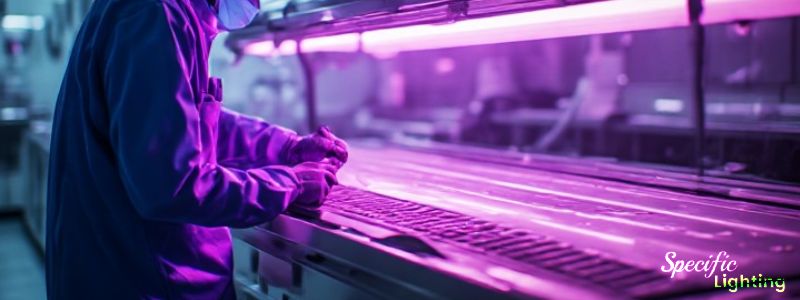
UV lighting has become a practical solution for businesses that need better control over microorganisms in air, water, surfaces, and production environments. From hospitals and laboratories to food-processing plants, commercial buildings, and water-treatment facilities, ultraviolet technology can provide an additional layer of protection without relying entirely on chemical disinfectants.
But choosing a UV light is not as simple as picking a lamp with the highest wattage. Wavelength, UV output, exposure time, installation distance, airflow, application, safety features, and maintenance all affect how well a system performs.
For businesses considering UV lighting, understanding these factors upfront can make it much easier to select the right equipment and avoid paying for a system that does not match the actual application.
What Is UV Lighting and How Does It Work?
Ultraviolet lighting uses electromagnetic radiation with wavelengths shorter than visible light. UV radiation is commonly divided into UVA, UVB, and UVC, with each range having different properties and uses.
For disinfection, UVC is the main area of interest. CDC guidance notes that UV radiation has its strongest bactericidal effect in roughly the 240–280 nm range, while conventional low-pressure mercury germicidal lamps commonly emit radiation around 253.7 nm.
The basic principle is fairly straightforward. When microorganisms receive a sufficient dose of UV energy, the radiation can damage their genetic material and prevent them from reproducing or remaining infectious. The actual performance, however, depends on more than the lamp being switched on.
UV intensity, exposure time, distance from the lamp, wavelength, microorganism type, airflow, and even dirt on the lamp can affect the result.
That is why a 100-watt UV lamp is not automatically “better” than a 60-watt lamp. The useful question is how much effective UV dose reaches the target, not simply how much electrical power the fixture consumes.
Types of UV Lighting
UVA Lighting
UVA has a longer wavelength than UVB and UVC and is widely used for applications such as curing, inspection, fluorescence, and certain industrial processes. It is not generally the first choice when the goal is germicidal disinfection.
For manufacturers, UVA can make sense when the application involves materials, coatings, adhesives, inspection systems, or specialized photochemical processes rather than microbial control.
UVB Lighting
UVB sits between UVA and UVC. It is associated with applications such as photobiological research and certain specialized industrial and medical uses.
Because UVB is not normally the go-to choice for commercial disinfection systems, buyers should be careful when comparing products simply because they are all marketed as “UV lights.”
UVC Germicidal Lighting
UVC is the category most closely associated with germicidal applications. It can be used to inactivate microorganisms in air, water, and on suitable exposed surfaces when the system is correctly designed.
Hospitals, laboratories, HVAC systems, water-treatment facilities, and commercial buildings are among the environments where germicidal ultraviolet systems may be used. CDC describes germicidal ultraviolet, or GUV, as a supplemental technology that can be incorporated into residential, commercial, educational, and healthcare environments.
Mercury UV Lamps and UV LED Systems
Traditional low-pressure mercury lamps remain widely used in germicidal applications. They can provide strong UV output and have a long history of commercial use.
UV LEDs offer another route. They are compact, can be switched on and off quickly, and allow manufacturers to build smaller and more controllable systems. Depending on the application, however, the initial equipment cost and UV output characteristics may differ considerably from traditional lamp systems.
The right choice comes down to the application rather than simply choosing the newest technology.
Major Applications of UV Lighting
Hospitals and Healthcare Facilities
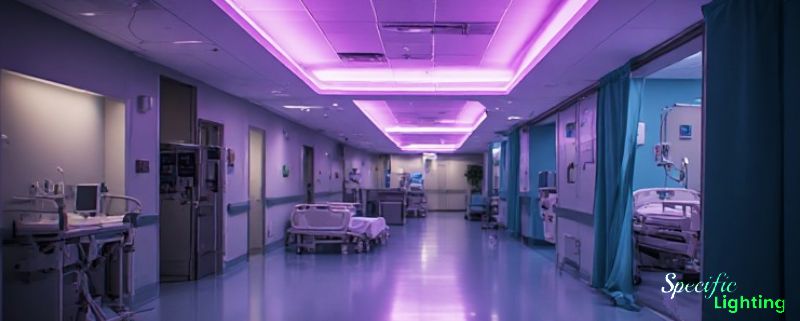
Healthcare facilities are one of the better-known applications for germicidal UV systems. UVGI can be used as a supplemental air-cleaning measure in areas such as patient-care environments, waiting areas, isolation-related spaces, and HVAC systems.
CDC guidance describes upper-room and in-duct UVGI as approaches used in healthcare settings, while also stressing that UV should complement other measures such as ventilation and filtration.
For hospitals, system design deserves particular attention because occupied spaces require careful control of UV exposure.
Food Processing Facilities
Food-processing companies can use UV technology in selected applications involving air, water, equipment, packaging areas, and exposed surfaces.
UV can be particularly useful where a facility wants an additional non-chemical treatment step. However, UV does not automatically replace established sanitation procedures, and the system needs to match the specific production process.
It is also worth separating UV treatment from food irradiation. Food irradiation is a different technology involving ionizing radiation, so the two should not be treated as interchangeable terms.
Water Treatment
UV water treatment is used in drinking-water systems, wastewater treatment, industrial process water, aquaculture, and other water-treatment applications.
The advantage is that UV can inactivate microorganisms without adding a disinfecting chemical directly to the water. System performance depends on factors such as water quality, UV transmittance, flow rate, lamp output, and the required UV dose.
For industrial buyers, these parameters should be evaluated before selecting a system.
HVAC Systems
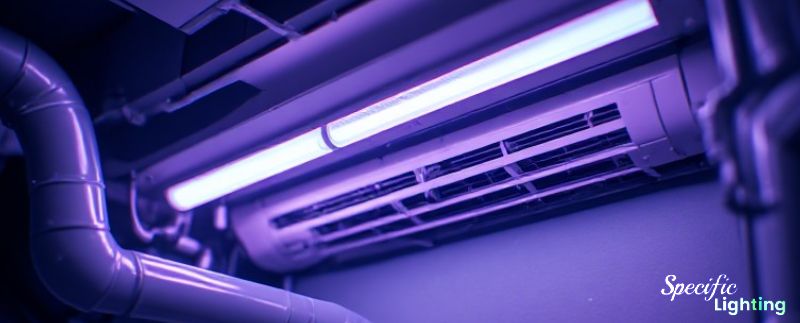
HVAC UV systems are commonly installed inside air-handling equipment or ductwork. The purpose can include treating airborne microorganisms and limiting microbial growth on components such as cooling coils.
Because air is continuously moving through an HVAC system, UV treatment can work as part of a larger air-cleaning strategy. EPA and CDC both describe HVAC-based UVGI as a supplemental approach rather than a substitute for ventilation and filtration.
Laboratories
Laboratories may use UV systems for controlled air or surface-treatment applications, depending on the facility and procedures involved.
Because laboratory environments can involve higher biological risks, UV equipment should be selected and installed according to the laboratory’s specific requirements rather than treated like an ordinary room light.
Pharmaceutical Manufacturing
Pharmaceutical production facilities often operate under tightly controlled environmental conditions. UV systems can be incorporated into air-treatment, cleanroom, equipment, or process-support applications.
In these environments, buyers typically need more than a product catalogue. Documentation, validation requirements, system performance, maintenance procedures, and compatibility with facility standards can all influence the purchasing decision.
Schools and Public Buildings
Schools, universities, offices, waiting areas, and other public buildings may use upper-room GUV or HVAC-based UV systems as an additional layer of indoor air treatment.
CDC notes that GUV can be particularly useful in crowded indoor settings and places where improving ventilation or filtration alone is difficult.
Aquaculture
Aquaculture systems can use UV treatment to help manage microorganisms in recirculating water. This can be useful in fish farms, hatcheries, and recirculating aquaculture systems where water quality has a direct effect on the production environment.
Here, flow rate and water clarity become especially important when sizing the UV system.
What to Check Before Buying UV Lighting
Choose the Correct Wavelength
Start with the wavelength. A product described simply as “UV light” does not tell you enough.
For germicidal applications, buyers should check the actual wavelength and understand why it is appropriate for the target microorganisms and application.
Look at UV Output, Not Just Wattage
Electrical wattage tells you how much power the device consumes. It does not necessarily tell you how much useful UV energy reaches the target.
Ask the supplier for actual UV output specifications and, where relevant, information about UV dose at a stated distance or operating condition.
Check the Coverage and Installation Conditions
A UV system designed for a small enclosed chamber is very different from one designed for a hospital waiting area or a large HVAC system.
The supplier should understand the room dimensions, airflow, installation height, and intended operating conditions before recommending a large-area system.
Consider Lamp Life and Maintenance
UV lamps do not maintain the same output forever. Over time, UV performance can decline even when a lamp still appears to be working.
Maintenance schedules, cleaning requirements, replacement intervals, and access to replacement lamps should therefore be part of the purchasing decision.
CDC notes that upper-room GUV systems generally require relatively little maintenance, while lamps commonly need replacement around once a year, depending on the product.
Ask About Safety Controls
For occupied spaces, safety features deserve close attention. Direct exposure to germicidal UVC can damage eyes and skin.
Depending on the system, buyers may want features such as shielding, interlocks, controlled switches, occupancy controls, warning labels, or other measures designed to prevent unintended exposure.
EPA specifically warns that UV products not designed for indoor air disinfection can create hazardous UV exposure, so professionally designed equipment is preferable for occupied environments.
How Much Does UV Lighting Cost?
The cost of UV lighting can vary significantly depending on the type of equipment, application, coverage area, UV wavelength, output requirements, and installation conditions. A replacement UV lamp and a complete commercial UV treatment system are very different investments, so comparing products based on unit price alone can be misleading.
A basic replacement UV lamp may cost relatively little, while a large commercial or industrial UV system can require multiple fixtures, power supplies, control equipment, sensors, protective measures, installation, commissioning, and ongoing maintenance.
For commercial and industrial projects, total cost of ownership (TCO) is often a more useful way to evaluate UV lighting than the initial purchase price.
| Cost Factor | Notes |
|---|---|
| Equipment and Fixture Costs | This is the initial cost of the UV lamps, UV LEDs, fixtures, power supplies, reflectors, housings, and other equipment required for the system. The price depends on the UV technology, output, system size, and application. |
| Electrical Installation and Wiring | UV equipment may require new wiring, electrical connections, switches, circuit protection, or other electrical work. Larger installations can require more extensive electrical infrastructure. |
| System Design and Engineering | Commercial UV systems often need application-specific design to determine the required UV output, number and position of fixtures, coverage, controls, and operating conditions. Professional engineering can add to the initial project cost but helps ensure the system is properly sized. |
| Installation and Commissioning | Installation costs include mounting the equipment, connecting electrical components, configuring controls, and checking that the system operates correctly. Commissioning may include testing and verifying system performance before operation. |
| Electricity Consumption | UV systems consume electricity throughout their operating life. Energy costs depend on the equipment’s power rating, operating hours, number of fixtures, and local electricity prices. |
| Lamp or LED Replacement Costs | Traditional UV lamps may require periodic replacement as their useful UV output decreases. UV LED systems may have longer operating lives, but their performance can also decline over time. Replacement costs should be included when calculating lifetime expenses. |
| Cleaning and Inspection | Dust, dirt, and deposits can reduce UV transmission and system performance. Regular cleaning and inspection may therefore be necessary, particularly in industrial or high-contamination environments. |
| UV Output Monitoring | Some applications require periodic measurement or monitoring of UV output to confirm that the system continues to provide the required performance. Monitoring equipment and testing services can add to ongoing operating costs. |
| Sensor and Control-System Maintenance | Systems using occupancy sensors, timers, interlocks, alarms, or automatic controls may require periodic testing, calibration, or replacement of electronic components. |
| Replacement Parts and Servicing | Over time, components such as power supplies, sensors, fans, connectors, control modules, or other system parts may need repair or replacement. Access to spare parts and technical support can affect long-term operating costs. |
| Expected Operating Life | The expected service life of the UV system helps determine its overall value. A system with a higher initial price may be more economical if it provides reliable performance with lower maintenance and replacement costs over a longer period. |
Typical UV Lighting Costs
As a practical example, the CDC estimates that installing an upper-room germicidal ultraviolet (GUV) system in a 500-square-foot space may cost approximately US$1,500 to US$2,500, including installation. Actual costs can vary depending on the building, system design, labor rates, ceiling height, electrical requirements, and local market conditions.
For larger applications such as hospitals, factories, laboratories, food-processing facilities, HVAC systems, and water-treatment plants, a site-specific quotation is generally much more useful than a generic online product price.
The required UV dose and treatment performance should also be established before selecting equipment. A lower-priced product may not provide sufficient UV output for the intended application, while an unnecessarily powerful system may increase energy consumption and equipment costs without providing meaningful additional value.
What Affects the Price of a UV System?
Several factors can influence the final project cost. The first is UV output and coverage. A small enclosed application may require only a single lamp or compact LED module, whereas a large room or industrial process may require multiple UV sources.
The installation environment is another important factor. Systems installed in high ceilings, restricted-access areas, industrial facilities, or existing HVAC equipment may require additional labor and specialized installation procedures.
Controls and monitoring can also increase the initial investment. However, features such as timers, occupancy controls, sensors, alarms, and UV intensity monitoring may improve operational management and make it easier to maintain consistent performance.
Ultimately, the right system should balance performance, safety, reliability, energy consumption, maintenance requirements, and lifetime cost rather than focusing only on the purchase price.
How to Choose a UV Lighting Supplier
Choosing a supplier is relatively simple when purchasing a small replacement lamp. For a hospital, factory, food-processing facility, HVAC system, laboratory, or water-treatment project, however, supplier expertise can have a major impact on the final result.
A capable supplier should be interested in understanding the application before recommending equipment. Rather than simply providing a product with the highest advertised power, they should consider the required UV dose, coverage, installation environment, operating conditions, safety requirements, and maintenance schedule.
What Should You Ask a UV Supplier?
| Supplier Information | What It Means |
|---|---|
| UV Output and Performance Data | Ask for verified UV output and performance data rather than looking only at electrical wattage. This helps determine whether the system can deliver the required UV performance. |
| Wavelength Specifications | The supplier should clearly state the UV wavelength produced by the lamp or LED. The appropriate wavelength depends on the intended application. |
| System Sizing and Design | For commercial projects, ask how the supplier determines the required number, power, and placement of UV fixtures. Proper sizing is essential for achieving the intended performance. |
| Safety and Installation Requirements | The supplier should provide clear installation conditions, operating instructions, and safety requirements. Proper installation is particularly important for UV systems that may create exposure risks. |
| Lifetime and Maintenance Requirements | Ask about lamp or LED lifetime, cleaning requirements, inspection schedules, and replacement intervals. This information helps estimate long-term maintenance costs. |
| Warranty and Technical Support | Check the warranty terms and whether the supplier provides technical support, replacement parts, troubleshooting, and after-sales service. Strong support can be particularly valuable for commercial installations. |
For larger GUV projects, it is particularly important to work with reputable manufacturers, experienced system designers, or qualified installation professionals. Buyers should also investigate the supplier’s previous projects, testing procedures, staff training, commissioning practices, and ongoing support capabilities.
A supplier that asks detailed questions about your facility before recommending a system is generally a better sign than one that immediately sends a generic product catalogue.
Consider UV Performance, Not Just Rated Power
One common mistake when comparing UV lighting products is focusing only on electrical wattage.
Electrical power does not necessarily tell you how much useful UV radiation reaches the target area. Two products with similar electrical power ratings may produce very different UV output depending on lamp efficiency, LED efficiency, optical design, operating temperature, reflector performance, and other system characteristics.
For commercial applications, buyers should therefore look for measured UV output and application-specific performance data rather than relying solely on wattage.
The required UV dose also depends on the target application. Air disinfection, surface treatment, water treatment, and other processes can have very different system requirements. A product suitable for one application should not automatically be assumed to be suitable for another.
UV Safety Should Be a Priority
UV systems must be designed and operated with appropriate safety controls. Some UV wavelengths can be harmful to the eyes and skin, so equipment should not be selected or installed without considering human exposure.
Commercial systems may incorporate shielding, interlocks, occupancy controls, warning indicators, timers, sensors, or other safeguards depending on the application.
For GUV installations, system design should account for the location of UV sources, room geometry, airflow, occupied areas, and potential exposure. Professional design and installation are particularly important for systems intended to operate in occupied spaces.
Safety should therefore be treated as part of the system specification, not as an optional feature added after installation.
How to Compare UV Lighting Suppliers
When comparing suppliers, it can be useful to evaluate more than product specifications and price. A supplier’s engineering capability, documentation, installation support, and after-sales service can make a significant difference over the life of a UV system.
| Factor | What to Look For |
|---|---|
| UV performance | Verified output and relevant performance data |
| Product quality | Reliable components and consistent manufacturing |
| System design | Application-specific sizing and engineering |
| Safety | Appropriate shielding, controls, and operating procedures |
| Installation | Qualified installation and commissioning support |
| Maintenance | Clear replacement and cleaning requirements |
| Documentation | Technical specifications, testing, and manuals |
| Warranty | Clear warranty terms and service coverage |
| Support | Availability of technical assistance and spare parts |
| Experience | Previous installations in similar applications |
| Lifetime cost | Equipment, energy, maintenance, and replacement costs |
The cheapest quotation is not necessarily the most economical solution. A system that costs less initially but requires frequent replacement, extensive maintenance, or additional modifications may ultimately cost more than a higher-quality system designed correctly from the beginning.
Finding the Right UV Lighting Solution
The best UV lighting system is rarely the one with the biggest wattage or the lowest purchase price. It is the one that matches the application, required UV dose, installation environment, safety requirements, operating schedule, and long-term maintenance plan.
For businesses working with hospitals, food-processing facilities, laboratories, pharmaceutical plants, commercial buildings, HVAC systems, water treatment, or other large-area applications, getting the system design right can make a major difference in both performance and operating cost.
If you are planning a UV lighting project and are unsure about the appropriate wavelength, lamp type, UV output, coverage, installation method, or overall system configuration, feel free to approach us for a consultation. We can discuss your application and help identify a UV lighting solution that fits the actual operating conditions rather than simply choosing a product from a catalogue.