UV lighting has become a practical disinfection solution for drinking water, wastewater, industrial process water, aquaculture, and many other applications where water quality needs to be managed consistently. Instead of adding a disinfecting chemical directly to the water, ultraviolet (UV) systems use light to inactivate microorganisms, making them a useful option for facilities looking to improve microbial control while keeping treatment processes straightforward.
However, choosing the right UV water treatment system involves more than checking lamp wattage or comparing equipment prices. Factors such as UV wavelength, delivered UV dose, flow rate, UV transmittance, reactor design, and operating costs all affect how well a system performs. Industry standards and independent validation also help buyers determine whether a system is suitable for its intended application.
For industrial buyers, the goal is to find a UV solution that meets the required treatment performance without creating unnecessary energy consumption, maintenance work, or operating expenses. Understanding the technology and its specifications makes that decision much easier.
What Is UV Lighting for Water Treatment?
How Ultraviolet Light Disinfects Water
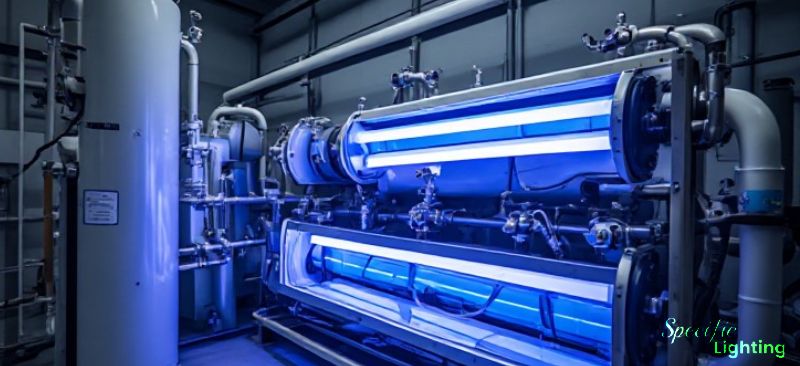
UV water treatment is a physical disinfection process that uses ultraviolet radiation to inactivate microorganisms as water passes through a specially designed treatment chamber. Inside the chamber, UV lamps or UV LED modules emit light that reaches microorganisms suspended in the water. The absorbed energy interferes with their genetic material, preventing them from reproducing effectively.
The most common wavelength range used for germicidal UV treatment is UV-C, which extends approximately from 200 to 280 nanometers (nm). Conventional low-pressure mercury lamps commonly produce their primary germicidal output at around 253.7 nm, a wavelength widely used in water disinfection systems.
Unlike filtration, which physically removes particles, UV disinfection primarily inactivates susceptible microorganisms rather than removing them from the water. It also does not remove dissolved salts, heavy metals, pesticides, or other chemical contaminants. If these substances need to be controlled, UV treatment must be combined with suitable processes such as filtration, activated carbon, reverse osmosis, or other treatment technologies.
The Role of UV-C Light in Microbial Inactivation
UV-C radiation damages microbial nucleic acids, including DNA and RNA, interfering with the biological processes needed for replication. The degree of inactivation depends on the microorganism, the wavelength, the delivered UV dose, and the conditions inside the treatment reactor.
UV dose is generally expressed in millijoules per square centimeter (mJ/cm²). It represents the UV energy received per unit area over a given exposure period. A higher dose can provide greater microbial inactivation under otherwise comparable conditions, although the relationship varies among microorganisms and cannot be treated as a universal conversion.
For example, a UV system designed to deliver a validated dose of 40 mJ/cm² under specified operating conditions is not automatically suitable for every application requiring the same nominal dose. Water quality, reactor hydraulics, target organisms, and the applicable validation method must also be considered.
How UV Water Treatment Systems Work
A typical UV water treatment system includes a UV lamp or LED module, a reactor chamber, a quartz sleeve or protective optical window, electrical components, and a control system. Depending on the application, the equipment may also include UV intensity sensors, flow meters, temperature monitoring, alarms, and automatic flow-control devices.
Water flows through the reactor, where the UV source exposes microorganisms to germicidal radiation. The reactor must distribute the UV energy effectively across the water flow while limiting conditions that could create poorly treated areas. Chamber geometry, lamp positioning, water velocity, and UV transmittance all influence the delivered dose.
In larger installations, system performance may be verified through full-scale reactor validation. This process evaluates how the equipment performs across a defined operating envelope, including flow rate, UV transmittance, lamp status, and other relevant conditions. For industrial facilities, validated performance data is more useful than relying on lamp wattage alone.
Common Types of UV Lamps Used in Water Treatment
Low-pressure mercury lamps are widely used in water disinfection because they emit strong germicidal radiation near 254 nm. Amalgam low-pressure lamps are a variation designed to provide higher UV output and can be useful in larger systems requiring greater throughput.
Medium-pressure mercury lamps emit radiation across a broader spectrum and can provide high UV output from a relatively compact source. They are used in certain municipal, industrial, and specialized treatment applications, although their electrical consumption, thermal characteristics, and maintenance requirements differ from those of low-pressure systems.
UV LEDs are another option, particularly where compact equipment, instant switching, or mercury-free operation is desirable. Available UV LED wavelengths commonly include approximately 265 to 280 nm, with performance varying by device and design. Their suitability depends on the required flow rate, optical efficiency, reactor configuration, and expected operating hours.
Common Applications of UV Lighting in Water Treatment
Drinking Water Purification
UV disinfection is used in municipal water treatment, commercial buildings, private water supplies, and point-of-use or point-of-entry systems. The required equipment depends on flow rate, source water quality, microbial risks, and the applicable drinking water requirements.
Small systems may serve a single drinking water outlet or an entire building, while municipal installations can handle thousands of cubic meters of water per day. Larger systems typically require more detailed hydraulic design, instrumentation, performance validation, and integration with existing treatment infrastructure.
For drinking water applications, buyers should check the certification scope and performance claims of the exact equipment model. A product intended for a small household system should not be assumed suitable for a high-flow municipal installation.
Municipal and Industrial Wastewater Treatment
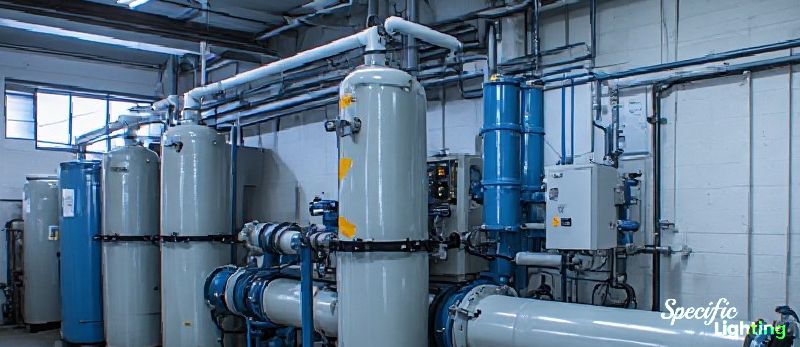
Wastewater UV systems are commonly used to disinfect treated effluent before discharge or reuse. They are often installed downstream of biological treatment and solids removal, where the water quality is more suitable for UV exposure.
Wastewater can be challenging because suspended solids, dissolved organic matter, and changing UV transmittance may reduce the radiation reaching microorganisms. A reactor designed for relatively clear drinking water may not perform as expected in wastewater without appropriate engineering adjustments.
For reuse applications, the required treatment level depends on the intended use, local regulations, and the risk of human or environmental exposure. Industrial buyers should assess both average and peak wastewater flow, seasonal water quality changes, and the need for redundancy during maintenance.
Industrial Process Water and Manufacturing
Manufacturing facilities may use UV treatment to control microbial contamination in process water, equipment-rinse water, and recirculating water loops. Applications vary widely across electronics, automotive production, general manufacturing, and other industrial sectors.
Some facilities need microbial control to protect product quality, while others use UV to reduce biological fouling in downstream equipment. In these cases, UV treatment may be part of a broader system that includes filtration, softening, reverse osmosis, or other purification stages.
The required UV specifications should reflect the process rather than a generic industrial rating. For example, a facility with strict microbial limits and continuous production may need online UV monitoring and an automatic diversion system, whereas a lower-risk application may use a simpler configuration.
Food, Beverage, and Pharmaceutical Water
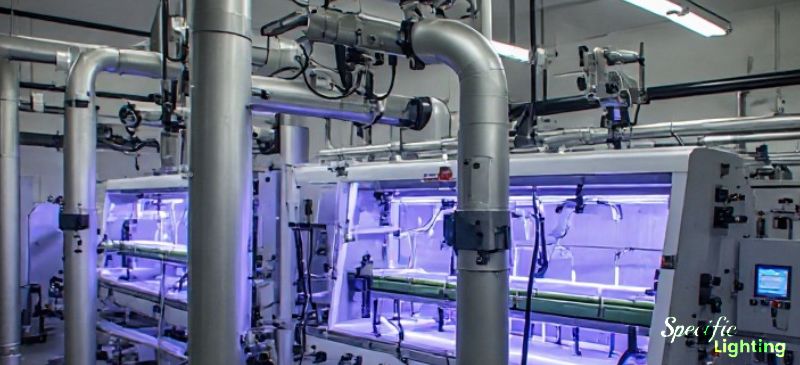
Food and beverage manufacturers may use UV systems for selected process-water and rinse-water applications, depending on the product, sanitation plan, and applicable regulations. Pharmaceutical facilities may use UV in purified-water systems for specific microbial-control or organic-compound management objectives.
These applications can have demanding requirements for materials, validation, documentation, and change control. Equipment selection should account for the complete water system, including hygienic design, cleaning procedures, monitoring, and compatibility with other treatment processes.
UV treatment alone does not automatically make water suitable for food production or pharmaceutical use. The facility must still meet the applicable water-quality specifications and demonstrate that the complete process is fit for purpose.
Aquaculture and Recirculating Aquaculture Systems
In aquaculture, UV treatment can help manage waterborne microorganisms and support stable water quality. Recirculating aquaculture systems, in particular, may benefit from a UV treatment stage because the same water passes through the system repeatedly.
The system must be sized according to actual circulation flow, water clarity, target organisms, and the level of microbial control required. Organic matter and suspended solids can interfere with treatment, so mechanical filtration and other water-quality controls remain necessary.
Excessive UV treatment is not a substitute for good fish husbandry, biofiltration, oxygen management, or disease prevention. A balanced system design protects water quality without disrupting the wider biological processes that keep the aquaculture environment stable.
Main Specifications of UV Lighting for Water Treatment
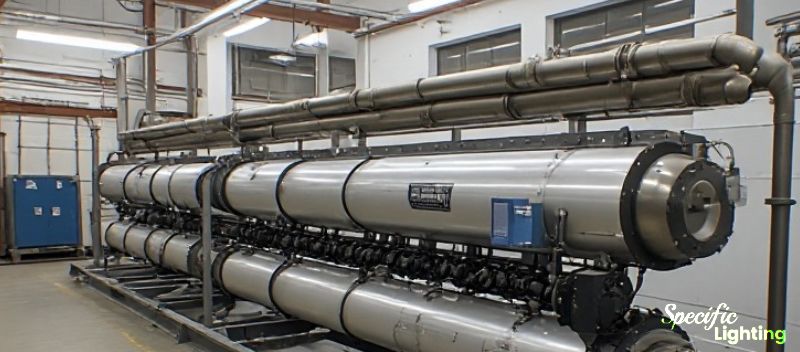
Selecting UV equipment starts with understanding the specifications that determine how much germicidal energy reaches the water. A lamp with a high electrical rating is not necessarily the best choice for a particular application. The reactor must deliver the required UV dose at the specified flow rate and under the expected water-quality conditions.
| Specification | Typical value or range | What it means |
|---|---|---|
| UV-C wavelength | 200–280 nm | Germicidal UV wavelength range |
| Low-pressure mercury lamp wavelength | 253.7 nm | Common wavelength for conventional UV disinfection |
| UV LED wavelengths | 265, 275, and 280 nm | Common options, depending on system design |
| Example lamp electrical power | 100 W | Electrical input, not actual germicidal UV output |
| Reference UV dose | 40 mJ/cm² | Used in some applications, not a universal requirement |
| Flow rate example | 10 m³/h | Equivalent to approximately 44 GPM |
| Peak flow rate example | 15 m³/h | Equivalent to approximately 66 GPM |
| Daily water throughput | 240 m³/day | At a continuous flow of 10 m³/h for 24 hours |
| UV transmittance (UVT) | 95% | Approximately 95% of incident UV passes through a 1 cm sample at the specified wavelength |
| Low-pressure mercury lamp service life | Approximately 8,000–12,000 hours | Typical rated range for some lamps; check manufacturer specifications |
UV Wavelength and Germicidal Output
Wavelength, measured in nanometers, describes the portion of the UV spectrum emitted by a light source. Conventional low-pressure mercury lamps produce their primary germicidal emission near 253.7 nm, while UV LED products are available at wavelengths such as 265 nm, 275 nm, and 280 nm.
The best wavelength depends on the target microorganisms, source technology, and reactor design. Although UV LEDs can offer flexibility in wavelength selection, a shorter wavelength or a higher electrical wattage does not automatically guarantee better overall disinfection performance.
Buyers should distinguish between electrical input power, measured in watts (W), and germicidal UV output power. For example, a 100 W lamp does not necessarily emit 100 W of germicidal UV radiation. The conversion efficiency varies with lamp technology, operating conditions, and product design.
When comparing products, request the manufacturer’s UV output data, operating conditions, and relevant test reports. These details provide a more reliable basis for comparison than a lamp’s electrical rating alone.
UV Dose and Microbial Reduction
UV dose is one of the main performance parameters in a water disinfection system. It is commonly expressed in mJ/cm² and depends on UV intensity and exposure time. In a real reactor, however, microorganisms follow different flow paths and receive different amounts of radiation, so the delivered dose is influenced by hydraulic conditions and the distribution of UV energy.
A nominal target of 40 mJ/cm² is often used as a reference point in certain UV disinfection applications, but it is not a universal requirement. The appropriate dose depends on the target organisms, required microbial reduction, water quality, regulatory requirements, and validated performance of the equipment.
Industrial buyers should request performance data showing the conditions under which the stated dose can be delivered. For validated reactors, this may include reduction-equivalent dose (RED), validated flow limits, allowable UV transmittance, and applicable sensor operating ranges.
Flow Rate and Treatment Capacity
Flow rate determines how much water passes through the reactor over a given period. It may be expressed in liters per minute (L/min), cubic meters per hour (m³/h), or gallons per minute (GPM). Since 1 m³/h equals approximately 4.40 GPM, these units can be converted easily when comparing international equipment specifications.
Consider an industrial line operating at 10 m³/h. Its daily throughput would reach 240 m³ if it ran continuously for 24 hours. If production demand rises to 15 m³/h during peak periods, the UV system must still meet the required performance at that higher flow, rather than only at the average operating rate.
Higher flow generally reduces exposure time and can lower the delivered dose if the reactor is not designed for the increased throughput. A system should therefore be selected using the maximum required operating flow and the validated performance envelope, with allowances for foreseeable production changes.
UV Transmittance and Water Quality
UV transmittance, or UVT, describes how much UV light passes through a water sample over a specified optical path, commonly 1 cm at 254 nm for conventional mercury-lamp systems. A UVT of 95% means approximately 95% of the incident radiation passes through that sample over the stated path length. It does not mean that 95% of microorganisms are inactivated.
Water with high UVT generally allows radiation to penetrate more effectively, while dissolved organic matter and other UV-absorbing substances can reduce treatment performance. Turbidity and suspended particles may also interfere with exposure, particularly when microorganisms are shielded within or behind particles.
For this reason, buyers should obtain representative water-quality data rather than relying on a single measurement taken under ideal conditions. If UVT varies seasonally or production conditions change the water composition, the design should account for the lower UVT values that the system is expected to encounter.
Lamp Life, Materials, and Monitoring
Lamp life varies with technology, operating conditions, switching frequency, and the manufacturer’s rating method. Some conventional low-pressure mercury lamps have rated service lives in the range of approximately 8,000 to 12,000 hours, although actual replacement intervals must follow the specific manufacturer’s recommendations and performance data.
A lamp can remain illuminated while its useful germicidal output declines. Therefore, visible light or an operating-status indicator alone is not sufficient evidence that a UV system is delivering the required dose.
Quartz sleeves protect many UV lamps while allowing UV radiation to pass into the water. Their condition affects optical transmission, so deposits and fouling need to be monitored. UV intensity sensors, flow monitoring, alarms, and suitable control logic provide additional safeguards when operating conditions move outside the validated range.
Materials also deserve attention. Reactor chambers, seals, connectors, and wetted components should be compatible with the water chemistry, pressure, temperature, cleaning methods, and applicable hygiene requirements.
Top Industry Standards for UV Water Treatment Systems
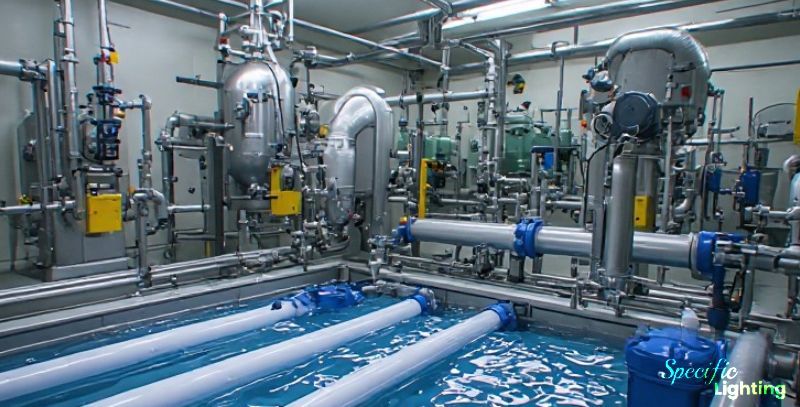
Industry standards and validation frameworks help buyers evaluate whether UV equipment has been tested for its intended application. However, not every standard covers the same type of equipment or performance claim. Product certification, reactor validation, electrical safety, and compliance with local drinking-water regulations are separate considerations.
| Standard or guideline | Region / organization | Main purpose |
|---|---|---|
| NSF/ANSI 55 | North America | UV microbiological water treatment systems; includes Class A and Class B |
| EPA Ultraviolet Disinfection Guidance Manual (UVDGM) | United States | Reactor validation, UV dose monitoring, and drinking water disinfection guidance |
| DVGW W 294 series | Germany | Technical requirements and testing for UV disinfection systems |
| ÖNORM M 5873 series | Austria | Requirements and testing approaches for UV disinfection equipment |
| DIN 19294 series | Germany | Technical requirements and testing for certain UV disinfection devices |
| ISO 9001 | International | Quality management systems, not UV disinfection performance certification |
| Applicable electrical safety and material requirements | Varies by market | Electrical safety, equipment compliance, and suitability of water-contact materials |
NSF/ANSI 55: Ultraviolet Microbiological Water Treatment Systems
NSF/ANSI 55 addresses UV microbiological water treatment systems, particularly those used for drinking-water applications. It includes two main performance classifications, commonly known as Class A and Class B.
Class A systems are designed for disinfection and the inactivation of microorganisms, including certain bacteria, viruses, and protozoan cysts, within the standard’s specified scope. Class B systems are intended for supplemental bactericidal treatment of water considered microbiologically safe, rather than for making contaminated water safe to drink.
The two classes are not interchangeable. Buyers should verify the precise classification, certified model, flow rate, and permitted operating conditions before purchasing a system. Certification should be checked against the applicable edition and the certifying organization’s current product listing.
U.S. EPA Ultraviolet Disinfection Guidance Manual
The U.S. Environmental Protection Agency’s Ultraviolet Disinfection Guidance Manual (UVDGM) provides technical guidance for UV disinfection in public drinking-water systems, particularly those seeking credit for pathogen inactivation under applicable U.S. drinking-water rules.
The guidance addresses reactor validation, dose monitoring, operating limits, and the use of reduction-equivalent dose as a performance measure. It also explains how operating conditions such as flow, UV intensity, and UV transmittance relate to validated reactor performance.
The UVDGM is guidance rather than a universal product certification. Its relevance depends on the project and regulatory framework, so industrial buyers should confirm whether the local authority requires validation using a specific protocol or accepts alternative approaches.
DVGW W 294, ÖNORM M 5873, and DIN 19294
DVGW W 294 is a German technical standards series associated with UV disinfection equipment and its performance verification. ÖNORM M 5873 is an Austrian standards series addressing UV disinfection systems. DIN 19294 also contains technical requirements relevant to certain UV disinfection devices.
These standards are particularly worth investigating for projects serving European or international drinking-water markets. Their detailed requirements and applicability can vary by edition, equipment type, and intended use.
Buyers should avoid assuming that a system meeting one standard automatically complies with another. Ask the supplier for the exact standard number and edition, the scope of testing, and the independent validation documentation relevant to the proposed installation.
ISO Standards and Electrical Safety Requirements
ISO 9001 provides a framework for quality management systems. It can help buyers assess a manufacturer’s production and quality-control processes, but it does not independently demonstrate that a UV reactor delivers a particular disinfection dose.
Depending on the installation, other requirements may apply to electrical equipment, electromagnetic compatibility, pressure-containing components, materials in contact with drinking water, or workplace safety. European projects may also need to consider applicable CE-marking obligations and relevant product legislation.
The correct approach is to build a compliance checklist around the destination market and intended application. Confirm the actual certificates and declarations rather than relying on broad claims such as “internationally certified” or “meets global standards.”
How to Choose the Right UV Water Treatment System
Define the Treatment Objective First
Start by identifying what the system needs to achieve. A drinking-water installation, a wastewater reuse project, and an industrial process-water loop may have very different microbial targets and operating conditions.
The required log reduction, regulatory obligations, downstream processes, and consequences of treatment failure should guide equipment selection. These factors establish the performance target before the buyer begins comparing lamp types or equipment prices.
Size the System Around Real Operating Conditions
A useful specification should include average and peak flow rates, minimum expected UVT, water temperature, pressure, operating hours, and any seasonal variations in water quality. If the process operates intermittently, the design should also account for startup conditions and the effects of frequent switching on the selected lamp technology.
For example, a plant that normally treats 8 m³/h but occasionally reaches 12 m³/h should not select equipment based only on the normal operating rate. The supplier should demonstrate that the proposed system meets the required performance at the maximum specified flow and the lowest design UVT.
It is also worth considering future expansion. A production line expected to grow by 20% over the next three years may benefit from a modular design or a reactor configuration that accommodates higher demand without a complete system replacement.
Compare Suppliers Using Technical Evidence
A supplier’s quotation should provide enough information to establish whether the equipment suits the intended application. Look for rated and validated flow ranges, UV dose or validation data, permitted UVT, electrical consumption, lamp replacement intervals, sensor specifications, and the recommended maintenance schedule.
Ask what happens when the lamp fails, UV intensity falls below the operating threshold, or flow exceeds the validated limit. Depending on the application, the system may need to trigger an alarm, stop the supply, or divert water until acceptable conditions are restored.
Warranty terms, spare-part availability, service support, and documentation also affect the purchasing decision. A lower-priced system may become more expensive over time if its replacement parts are difficult to obtain or if the supplier cannot provide adequate technical support.
UV Lighting Design and Cost Considerations
Estimating Energy Consumption and Electricity Costs
Electricity consumption can be estimated using the system’s electrical input power and annual operating hours. The basic calculation is:
Annual electricity cost = Power consumption (kW) × Operating hours per year × Electricity rate (US$/kWh).
Suppose a UV system draws 2 kW, operates 8,000 hours annually, and uses electricity priced at US$0.12/kWh. Annual electricity consumption would be 16,000 kWh, resulting in an estimated electricity cost of US$1,920.
For comparison, a 3 kW system operating under the same conditions would consume 24,000 kWh and cost US$2,880 per year. The difference would be US$960 annually, or US$4,800 over five years if the electricity rate and operating hours remained unchanged.
These figures are illustrative, not market quotations. Actual power demand can vary with lamp technology, operating mode, ballast efficiency, controls, and the number of reactors required. A system with higher electrical consumption may still be the better choice if it provides the required validated performance more reliably or suits the process more effectively.
Estimating Total Cost of Ownership
Purchase price is only one part of the overall expense. A useful lifecycle estimate includes equipment and installation, electricity, replacement lamps or LED modules, quartz sleeves, sensor calibration, cleaning supplies, planned maintenance, and the cost of any production downtime.
For a simplified example, consider a hypothetical installation with a US$6,000 equipment and installation cost, US$1,920 in annual electricity expenses, US$500 in annualized replacement parts and maintenance, and a five-year evaluation period.
The estimated five-year cost would be US$6,000 + (US$1,920 × 5) + (US$500 × 5), giving a total of US$18,100. This excludes financing, inflation, taxes, major unplanned repairs, and the time value of money. The numbers are intended to demonstrate the calculation method rather than represent typical market prices.
When comparing two suppliers, use the same operating assumptions and evaluation period. A more expensive system may offer lower electricity use or less frequent maintenance, while a cheaper system may have higher ongoing expenses. Comparing lifecycle costs gives buyers a clearer picture than comparing initial quotations alone.
Designing for Reliable Operation
A well-designed UV installation should provide adequate treatment at the maximum design flow without consuming more energy or maintenance resources than necessary. Reactor sizing, lamp arrangement, hydraulic distribution, UVT, and control settings all influence the final result.
Instrumentation should match the level of risk. A small, low-flow installation may need relatively simple status indicators, while a continuous industrial process may require UV intensity monitoring, flow measurement, alarm logging, and automatic shutdown or diversion functions.
Facilities should also consider redundancy. In an installation where treatment interruption would stop production or compromise water quality, two smaller reactors arranged to provide standby capacity may be preferable to relying on a single unit. The final configuration depends on the required capacity during maintenance and the consequences of equipment failure.
Before commissioning, confirm that the installed system matches the approved design and that the required alarms, sensors, flow limits, and operating procedures have been tested. Documenting baseline conditions makes later performance checks and troubleshooting much more straightforward.
Installation, Operation, and Maintenance
Routine Inspection and Preventive Maintenance
A preventive maintenance program should cover lamp condition, quartz sleeve cleanliness, UV sensor operation, electrical connections, seals, and control-system alarms. The frequency depends on operating hours, water chemistry, manufacturer guidance, and the consequences of equipment failure.
For example, a facility operating continuously for 8,000 hours annually should plan its maintenance schedule around actual operating hours as well as calendar intervals. If a lamp has a specified rated life of 10,000 hours, the facility should not assume that its germicidal output will remain adequate until the exact hour that the lamp reaches that rating.
Maintenance records should include operating hours, replacement dates, sensor checks, alarm events, and any water-quality changes that could affect performance. These records help the team identify recurring problems and estimate future operating expenses.
Monitoring, Calibration, and System Verification
UV intensity sensors should be maintained and calibrated according to the manufacturer’s instructions and any applicable validation requirements. Flow meters and other instrumentation should also be checked to confirm that the operating data used by the control system remain reliable.
After installation or major maintenance, verify that the equipment operates within its specified limits. Where required, commissioning and performance verification should follow the applicable regulatory or project-specific protocol.
Operators should know how the system responds to low UV intensity, high flow, sensor faults, and lamp failure. Clear procedures reduce the chance of water continuing downstream when the equipment cannot demonstrate acceptable treatment conditions.
Frequently Asked Questions About UV Lighting for Water Treatment
What Wavelength Is Best for UV Water Disinfection?
Conventional low-pressure mercury lamps emit their primary germicidal output near 253.7 nm. UV LED systems commonly operate at selected wavelengths between approximately 265 and 280 nm, depending on the product.
The best choice depends on the target microorganisms, reactor design, required dose, and validated performance. Wavelength alone does not determine whether a system is suitable for a particular water treatment application.
What UV Dose Is Required for Water Treatment?
The required dose depends on the target organisms, intended microbial reduction, water quality, and applicable standards. A value of 40 mJ/cm² is used in some UV treatment applications, but it should not be treated as a universal specification.
Buyers should confirm the required dose with the relevant regulatory guidance, project requirements, and validated equipment data. Flow rate and UVT must also be considered when determining whether the system can deliver that dose consistently.
Does UV Lighting Remove Chemicals From Water?
No. Conventional UV disinfection primarily inactivates microorganisms and does not physically remove dissolved salts, heavy metals, or most other chemical contaminants.
Specialized UV processes can be used in advanced oxidation systems to help break down certain organic compounds, usually with additional treatment components. These systems have different design requirements from standard UV disinfection equipment.
How Long Do UV Water Treatment Lamps Last?
Lamp service life depends on the technology and operating conditions. Some low-pressure mercury lamps have rated lives of approximately 8,000 to 12,000 hours, while other technologies may have different service-life ratings.
The replacement schedule should follow the manufacturer’s guidance and the system’s performance-monitoring requirements. A lamp that still illuminates may no longer deliver sufficient germicidal output.
Is UV Water Treatment Better Than Chlorination?
Neither technology is automatically better for every application. UV provides disinfection without direct chemical addition, while chlorine can provide a residual that helps control microbial growth in downstream distribution systems.
Some facilities use both technologies to combine UV inactivation with residual protection. The appropriate approach depends on the source water, microbial risks, distribution system, regulations, and operating requirements.
How Much Does a UV Water Treatment System Cost?
The price varies with treatment capacity, required dose, lamp technology, reactor materials, instrumentation, certification, and installation complexity. Small systems and large industrial installations can have very different cost structures, so a single price range may be misleading without a defined application.
For a meaningful quotation, provide the required flow rate, water quality, UVT, target treatment performance, operating hours, and installation conditions. Request an itemized estimate covering equipment, installation, electricity consumption, replacement parts, and maintenance.
Choosing a UV Solution That Fits Your Process
UV lighting offers a flexible way to manage microbial contamination across drinking water, wastewater, industrial process water, and specialized treatment applications. Its effectiveness depends on matching the UV source and reactor to the actual water conditions, required dose, flow rate, and operating environment.
For industrial buyers, a sound purchasing decision starts with verified technical specifications and continues through installation, monitoring, and maintenance. Evaluating relevant standards, lifecycle costs, and supplier support alongside treatment performance helps create a system that is practical to operate over the long term. If you are planning a new installation or upgrading an existing water treatment line, contact our team for a technical consultation. We can help assess your application requirements, compare suitable UV lighting options, and identify a solution aligned with your water quality, capacity, and operating goals.