
Sports lighting does much more than brighten a field after sunset. It affects how clearly players track a fast-moving ball, how comfortably spectators watch a game, and how well a sports facility can operate in the evening. For facility owners, schools, sports clubs, and stadium operators, getting the lighting right also means balancing installation costs, electricity bills, maintenance, and local lighting regulations.
LED sports lighting has become a popular choice for new installations and renovation projects because it offers high light output, flexible controls, and lower maintenance requirements than many older lighting systems. However, choosing fixtures based on wattage or price alone can lead to uneven illumination, annoying glare, and unnecessary spending.
The better approach is to start with the sport, field dimensions, target illuminance, and pole layout, then select fixtures that meet those needs. Whether you’re planning a community soccer field, a baseball complex, an indoor basketball court, or a professional stadium, understanding the basics will help you make better purchasing decisions and build a lighting system that works for years to come.
What Is Sports Lighting?
Sports lighting refers to the lighting systems used in outdoor fields, indoor courts, stadiums, sports halls, and recreational facilities. These systems are designed to provide enough light for players to see clearly, react quickly, and perform their movements safely. Unlike ordinary area lighting, sports lighting must account for the speed of play, ball trajectories, viewing angles, playing surface dimensions, and the positions of spectators and cameras.
A tennis player tracking a high serve has different visual needs from a soccer goalkeeper watching a long pass or a baseball batter following a pitch. That’s why sports lighting cannot be treated as a one-size-fits-all product. The right design depends on the sport, the level of competition, and how the venue will be used.
Different Types of Sports Lighting Systems
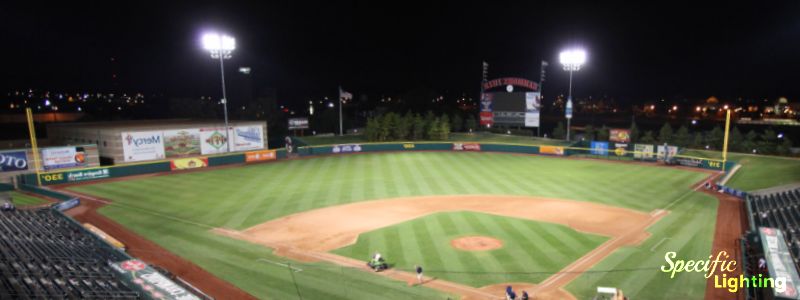
Outdoor sports fields usually rely on high-output LED floodlights installed on poles around the playing area. These fixtures project light across large distances, allowing a relatively small number of carefully positioned luminaires to cover a wide field. Soccer grounds, cricket ovals, rugby fields, and baseball diamonds commonly use this arrangement, although the number and height of poles vary with the layout and performance requirements.
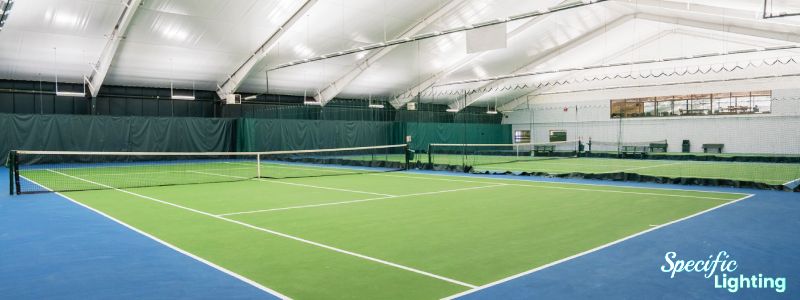
Indoor sports facilities have a different setup. Basketball courts, badminton halls, volleyball courts, and multipurpose gymnasiums typically use ceiling-mounted LED luminaires or high-bay fixtures. Since the lights are closer to the playing surface, glare control, ceiling height, and protection against ball impacts become major design considerations.
Professional stadiums often require a more advanced system that supports both live competition and television broadcasting. These venues may need higher illuminance, carefully controlled vertical lighting, consistent color rendering, and flicker performance suitable for high-speed cameras. Community sports facilities generally have simpler requirements, although they still need good visibility and reasonable control of glare and light spill.
LED Sports Lighting vs. Metal Halide Lighting
Metal halide floodlights were widely used in sports facilities before LED technology became more common. They can deliver substantial light output, but they generally require warm-up time, consume more electricity for comparable applications, and need periodic lamp replacement. Their light output can also decline as the lamps age.
LED sports lights switch on quickly, can support dimming when paired with compatible drivers and controls, and are available with different optical distributions for specific field layouts. They also tend to require less routine maintenance, particularly where accessing a fixture involves hiring a lift or arranging work at height.
The following table gives a general comparison.
| Feature | LED sports lighting | Metal halide lighting |
|---|---|---|
| Start-up | Near-instant | Usually requires warm-up |
| Dimming | Available with compatible systems | More limited |
| Energy use | Generally lower for comparable designs | Generally higher |
| Maintenance | Often lower | More frequent lamp replacement |
| Light distribution | Wide range of optical options | Depends on reflector and lamp design |
| Initial cost | Can be higher than basic legacy replacements | Existing equipment may be cheaper to replace like-for-like |
The actual savings depend on the equipment being replaced, operating hours, electricity rates, and the quality of the new lighting design. A well-planned LED upgrade can reduce operating expenses, but the payback should be calculated using the project’s real numbers rather than a generic percentage.
Sports Lighting Design and Layout Principles
Good sports lighting starts with the layout, not the fixture catalogue. Before choosing a 500W or 1000W floodlight, the designer needs to understand the playing area, the target illuminance, the mounting positions, and the directions from which the light will reach the field.
A fixture with excellent efficiency can still produce poor results if it is aimed incorrectly or installed at an unsuitable height. Likewise, adding more fixtures does not automatically solve every problem. The goal is to put the right amount of light in the right places while keeping glare, dark patches, and wasted light under control.
How to Plan a Sports Lighting Layout
The first step is to establish the dimensions of the playing area and any surrounding zones that need illumination. A full-size soccer pitch, for example, may measure around 105 m by 68 m, while a tennis court has a much smaller playing area and different viewing directions. Run-off zones, team areas, access paths, and other nearby spaces may also need to be considered.
Next, the designer identifies the required lighting level. A community training ground may operate with lower illuminance than a professional venue hosting televised matches. The specification should also address uniformity, glare, vertical illuminance where relevant, and any local restrictions on spill light.
The pole layout can then be developed. A small outdoor court might use four poles, while a larger field may require six or eight, depending on the pole height, fixture optics, field geometry, and required performance. These are possible configurations rather than fixed rules. A photometric simulation should determine whether the proposed arrangement will achieve the target values.
The final design should be checked against the actual products being considered. Manufacturers’ photometric files, commonly supplied in IES or LDT formats, allow lighting software to calculate expected illuminance across a defined grid. This gives the project team a much clearer picture of performance than simply estimating the number of fixtures from their wattage.
Lux and Foot-Candle Requirements for Sports Fields
Lux and foot-candles are units used to describe illuminance, which measures how much light reaches a surface. Lux is commonly used in international lighting specifications, while foot-candles are frequently used in the United States.
One foot-candle is approximately 10.764 lux. That means 30 fc is about 323 lux, and 50 fc is about 538 lux. These conversions are useful when comparing specifications from manufacturers or consultants working in different measurement systems.
However, the target illuminance is only one part of the design. Designers also need to distinguish between horizontal illuminance, measured on a horizontal plane such as the field surface, and vertical illuminance, measured on a vertical plane. Vertical illuminance can be particularly relevant when players, officials, spectators, or broadcast cameras need to see people and moving objects clearly from different directions.
The table below provides illustrative early-planning ranges, not universal sports standards. Actual requirements vary by governing body, competition level, measurement method, and whether the venue is intended for broadcast.
| Sport or facility use | Illustrative average horizontal illuminance |
|---|---|
| Recreational outdoor court | 100–200 lux |
| Community tennis court | 200–300 lux |
| Recreational soccer field | 100–200 lux |
| Club-level soccer field | 200–500 lux |
| Training or competition baseball field | 200–750 lux |
| Indoor recreational basketball court | 200–500 lux |
| Higher-level competition facility | 500–1,000+ lux |
| Professional broadcast venue | Project-specific; may exceed 1,000 lux |
These ranges should not be used as final design specifications. A professional soccer venue and a neighborhood training field may use the same sport and similar dimensions, yet require very different lighting performance. Baseball also needs careful consideration of ball tracking, vertical illuminance, and the distinct requirements of the infield and outfield.
For a purchasing project, ask the supplier to state the required average illuminance, minimum illuminance, uniformity ratio, measurement plane, and maintenance assumptions. A quotation that only says “500 lux” leaves too many questions unanswered.
Understanding Sports Lighting Uniformity
Uniformity describes how evenly light is distributed across the playing surface. Two fields can have the same average illuminance while looking quite different in practice. One may be consistently bright, while the other has very bright patches near the poles and noticeably darker areas in the middle.
A common measure is the minimum-to-average uniformity ratio, written as:
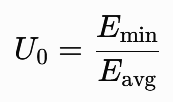
Here, Emin is the minimum measured or calculated illuminance, and Eavg is the average illuminance across the specified grid.
For example, if a field has an average illuminance of 300 lux and a minimum of 180 lux, its minimum-to-average uniformity is 0.60. If the minimum drops to 120 lux while the average remains 300 lux, the ratio falls to 0.40. The second field has a greater difference between its darkest areas and its average.
A higher uniformity ratio generally indicates a more even distribution, but the required target depends on the sport and competition class. Designers must use the applicable specification rather than assuming one ratio suits every venue.
Uniformity is influenced by pole height, pole spacing, fixture aiming, beam distribution, and the number of luminaires. If a design struggles to meet the target, adding fixtures may help, but adjusting the optics or aiming angles could be more effective and less expensive.
Choosing the Right Color Temperature
Color temperature, measured in kelvins (K), describes whether a light source appears warmer or cooler. It does not measure brightness, and a higher Kelvin rating does not automatically mean a fixture produces more usable light.
Sports LED floodlights are commonly available in color temperatures such as 3000K, 4000K, 5000K, and 5700K. A 3000K source appears warmer, while 5000K and 5700K sources look cooler and whiter. The choice depends on the venue, visual preferences, environmental considerations, and any applicable specification.
| Color temperature | Typical appearance | Potential applications |
|---|---|---|
| 3000K | Warm white | Some recreational venues and locations with tighter environmental considerations |
| 4000K | Neutral white | Community facilities and multipurpose venues |
| 5000K | Cool white | Many outdoor sports applications |
| 5700K | Cooler white | Selected competition or specialist applications where specified |
For many sports facilities, 4000K to 5700K is a practical starting point for product evaluation, but the final choice should be based on the design brief. Local regulations may restrict certain lighting characteristics, and broadcast venues may have additional color-quality requirements.
Color rendering also deserves attention. The color rendering index (CRI) indicates how accurately a light source reveals colors compared with a reference. A CRI of 70 or 80 may be suitable for some outdoor installations, while a televised event may require a more detailed color-quality specification. Camera performance depends on more than CRI alone, so professional broadcast projects should assess the full lighting requirements.
Selecting the Correct Beam Angle and Optical Distribution
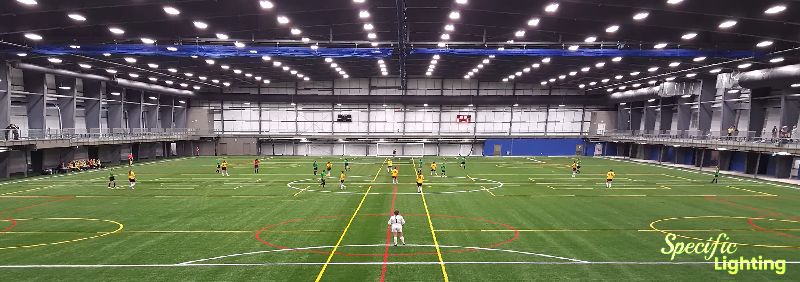
Beam angle affects how light spreads from a fixture. Narrower distributions can project light over longer distances, while wider distributions spread light across a larger area at shorter distances. However, beam-angle labels alone do not tell the whole story because manufacturers may use different definitions, and asymmetric optics do not behave like a simple circular beam.
For a field with high poles positioned outside the sidelines, a long-throw optic may help direct light toward the center of the playing area. A wider distribution may be more suitable for certain nearer zones. Many sports projects use a mixture of optical distributions to achieve the required lux levels and uniformity.
The design also needs to control light that misses the field. Excessive backlight or spill light can affect nearby homes, roads, and natural areas. A well-selected asymmetric optic can place more light where it is needed and reduce unnecessary illumination beyond the target area.
Choose beam distribution based on photometric results, not just the product name. Two fixtures with the same wattage and nominal beam angle may produce different results because of differences in lens design, LED arrangement, output, and optical efficiency.
Sports Lighting Pole Height and Placement
Pole height influences how far the light travels, how evenly it spreads, and the angles at which players see the luminaires. Higher poles can help distribute light across larger areas, but they may increase structural costs and require more substantial foundations. Lower poles can be less expensive to install, yet may create stronger glare or more pronounced bright spots if the optics and layout are not designed carefully.
For small outdoor courts, mounting heights might fall around 6–12 m, depending on the site and applicable guidance. Larger fields may use poles around 15–30 m or more, especially where competition or broadcast requirements demand long-throw lighting. These figures are broad planning examples, not recommended heights for every facility.
Pole positions also matter. Four-pole layouts can work for some small courts, while larger fields may use six or eight poles to achieve more balanced coverage. The designer should account for the playing area’s shape, spectator positions, nearby buildings, trees, and viewing directions.
Before reusing existing poles, have their condition and structural capacity assessed. A replacement LED floodlight may have a different weight, wind load, mounting arrangement, or center of gravity than the older fixture. The electrical supply, brackets, and foundations should be checked as part of the retrofit rather than assumed to be suitable.
Glare Control, Flicker, and Spill Light
Glare can make it harder for players to track a ball, especially when looking upward or toward a high-speed shot. In tennis, the problem may arise during a serve or lob. In soccer, a goalkeeper may need to follow a high cross while moving quickly across the goalmouth. The placement and aiming of floodlights should account for these viewing directions.
Flicker is another factor to consider, particularly in venues used for slow-motion video or television broadcasts. LED drivers and dimming controls should be selected to meet the project’s flicker-performance requirements. A fixture described as “flicker-free” should still be supported by suitable technical data for the intended camera and operating conditions.
Spill light is the light that reaches areas outside the intended playing zone. To reduce it, designers can use suitable optics, precise aiming, shielding, and timed or dimmed operating modes. These measures can also help a facility meet local planning conditions and maintain better relationships with nearby residents.
Photometric Simulation and Lighting Design Software
Photometric simulation helps predict how a lighting system will perform before equipment is purchased and installed. Using the field dimensions, mounting positions, fixture photometric files, and aiming angles, the software calculates illuminance across a grid of points.
A useful report should show average and minimum illuminance, maximum illuminance where relevant, uniformity ratios, fixture locations, mounting heights, and aiming information. It should also explain the assumptions behind the calculation, including maintenance factors and any relevant obstructions.
Ask the supplier for a design based on the exact fixture model and optical configuration being quoted. A simulation prepared using one fixture cannot automatically be used to justify a different model with different photometric performance. This is especially relevant when comparing several suppliers or considering a lower-cost alternative.
Sports Lighting Requirements by Sport
Each sport has its own visual demands. The size of the playing area is only one consideration; ball speed, ball trajectory, viewing direction, and the level of competition can all change the lighting specification.
Football and Soccer Field Lighting
Soccer fields need consistent illumination across the pitch, with sufficient visibility for players to follow ground passes, long balls, and aerial play. A full-size pitch measuring around 105 m by 68 m has an area of approximately 7,140 m², before run-off zones and other surrounding areas are included.
A recreational facility may operate with modest lighting levels, while a professional stadium requires a more demanding design. Competition class, camera positions, vertical illuminance, uniformity, and glare all affect fixture selection. For televised games, the lighting specification should be developed around the applicable competition and broadcast requirements rather than relying on a general lux target.
Pole configurations vary by site, but larger pitches often use six or eight poles. The design may combine long-throw and medium-throw optics to achieve coverage from the sidelines and corners. The designer should also consider how the system will illuminate goal areas, corners, and the center of the pitch without creating distracting glare.
Baseball and Softball Field Lighting
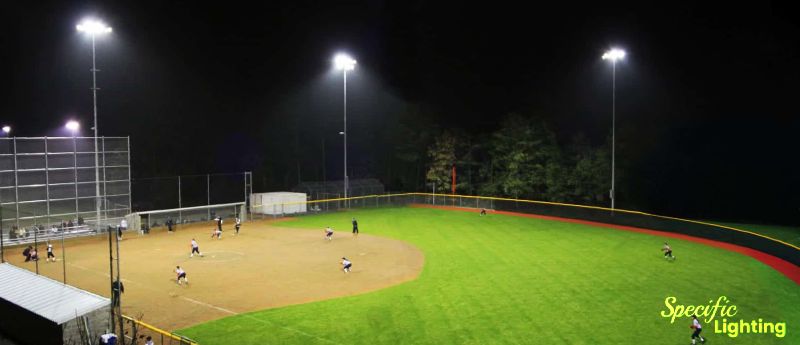
Baseball lighting requires special care because the ball moves quickly and can travel high into the air. The infield and outfield have different visual requirements, so a single average lux figure may not adequately describe the design.
Pitchers, batters, fielders, and outfielders all look in different directions during play. Glare control and vertical illuminance can therefore be just as relevant as horizontal illuminance. A system that looks bright from the stands may still make it difficult for an outfielder to track a fly ball.
The lighting layout should account for the diamond shape, foul territory, outfield dimensions, and pole positions. A smaller community diamond will generally require a different fixture arrangement and budget from a multi-field baseball complex hosting competitive games.
Cricket Ground Lighting
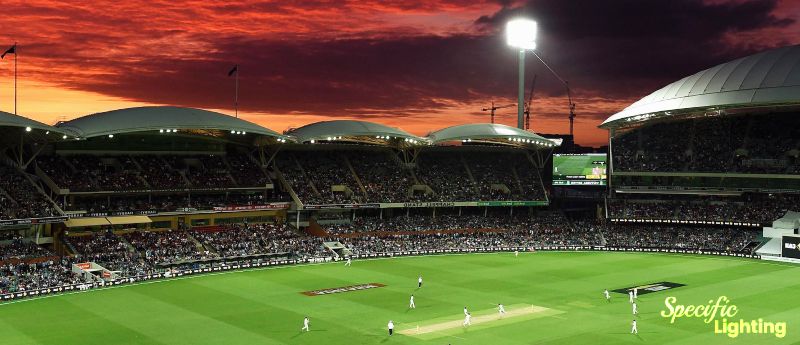
Cricket grounds often cover large areas, and the pitch, inner field, and outfield must work together as one lighting environment. Ball tracking is a major concern because the ball can travel quickly and at changing heights. The lighting design should therefore consider horizontal and vertical illuminance, glare, uniformity, and viewing angles.
Large grounds may use high poles with long-throw optics, while training nets and practice facilities can use smaller-scale layouts. If the venue hosts televised matches, the requirements may be considerably more demanding than those for local club games. The design should be checked against the relevant competition and broadcast specifications before equipment is selected.
Tennis Court Lighting
Tennis lighting must help players follow the ball during groundstrokes, serves, and overhead shots. For outdoor courts, pole positions are usually planned around the court and its run-off zones to avoid interfering with play. Indoor courts require careful attention to ceiling height and the position of luminaires relative to players’ lines of sight.
A standard doubles court is approximately 23.77 m long and 10.97 m wide, excluding the surrounding run-off area. A design covering several adjacent courts must consider whether the courts will operate simultaneously and whether the lighting system needs separate controls for each zone.
A typical community court may use a design target around 200–300 lux, subject to the applicable standard and usage level. Competitive play may require higher levels and tighter uniformity. The final fixture quantity should be determined by photometric calculations, not by copying a layout from a court with different dimensions or pole heights.
Basketball Court Lighting
Basketball lighting must support quick changes of direction, overhead shots, rebounds, and fast movement across the court. Indoor courts typically use ceiling-mounted luminaires, while outdoor courts may use floodlights installed on poles around the playing area.
For indoor facilities, glare and reflected light can be concerns, especially where the ceiling or playing surface has reflective finishes. Fixture placement should help players see the ball near the basket without looking directly into intense light sources.
Schools and community gyms may need different lighting levels from tournament venues. Multipurpose sports halls should also consider how the same lighting system will perform for volleyball, badminton, and other activities. Independently controlled lighting zones can make the facility more flexible and help reduce electricity use when only part of the space is occupied.
Other Sports and Multipurpose Facilities
Rugby, hockey, volleyball, badminton, athletics, and community recreation facilities all have their own design requirements. Rugby fields cover large areas, while badminton courts require careful control of direct glare and the visibility of a small, fast-moving shuttlecock. Hockey and athletics venues may need different lighting arrangements for the playing surface, track, and surrounding event areas.
Multipurpose facilities can benefit from lighting scenes that suit different activities. A training session may use a lower output than a competition, provided the resulting illuminance remains appropriate for the activity and the applicable requirements. Separate switching zones can also let operators illuminate only the courts or field sections currently in use.
Before purchasing equipment for a multi-sport site, prepare a schedule of activities and identify the most demanding intended use. Designing only for the easiest lighting scenario can leave the facility unable to support the competitions or events it was built to host.
How to Choose the Right LED Sports Lights
Once the lighting requirements are clear, the next step is selecting the fixtures. Product specifications should be assessed as a complete package rather than as isolated numbers. A high-wattage floodlight may deliver substantial output, but that does not guarantee that the light will reach the playing surface evenly.
Wattage, Lumens, and Fixture Quantity
Wattage measures electrical power consumption, while lumens measure the total visible light output. Lumens per watt, or lm/W, describes how efficiently a fixture converts electrical power into visible light. These values help narrow down products, but they do not replace photometric design.
Sports LED floodlights are available in a wide range of outputs, including 200W, 300W, 500W, 750W, 1000W, and 1500W models. Some projects may use higher-output products, while smaller courts may be adequately served by lower-power fixtures. The appropriate model depends on the field size, pole height, target illuminance, beam distribution, and number of luminaires.
For example, a 1000W fixture operating at 150 lm/W would produce approximately 150,000 lumens, assuming that the stated efficacy applies to the complete fixture. A 500W fixture at the same efficacy would produce around 75,000 lumens. Even so, the two products may have different optics, so the relationship between their lumen output and the light reaching the field is not necessarily straightforward.
A rough fixture-count estimate can be made from the playing area and target illuminance, but it should only be used for initial budgeting. The following equation illustrates the basic relationship:
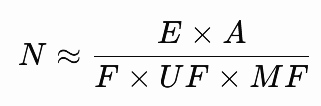
In this equation, N is the estimated fixture count, E is the target average illuminance in lux, A is the area in square metres, F is the luminous output per fixture in lumens, UF is the utilization factor, and MF is the maintenance factor.
Suppose a facility has a 7,140 m² playing area, a target average illuminance of 200 lux, fixtures producing 75,000 lumens each, a utilization factor of 0.50, and a maintenance factor of 0.80. The simplified calculation gives approximately 48 fixtures.
That result is only a preliminary estimate, not a recommended layout. It assumes simplified utilization and maintenance factors and does not confirm uniformity, glare, pole placement, or the performance of each aiming direction. A proper photometric simulation may produce a different fixture count.
Specifications to Compare Before Buying
The fixture’s complete datasheet should include power consumption, delivered lumens, efficacy, optical distribution, color temperature, CRI, surge protection, ingress protection, operating temperature, and expected service life. If the project requires dimming or broadcast performance, the relevant control and flicker data should also be available.
For outdoor installations, IP65 or IP66 protection is common in sports floodlights. IP66 provides a higher level of protection against water jets than IP65, but the correct choice should reflect the site’s exposure, cleaning methods, and installation conditions. IK ratings describe resistance to mechanical impact and may be relevant where equipment is exposed to impacts or vandalism.
Warranty terms deserve the same attention as the headline specifications. Compare the warranty period, coverage for drivers and LEDs, exclusions, replacement procedures, and the availability of spare parts. A long rated lifetime does not necessarily mean the entire fixture is covered for that duration.
Choosing a Reliable Sports Lighting Supplier
A capable supplier should be able to explain how its proposed fixtures meet the design requirements. Ask for photometric files, product datasheets, warranty details, relevant test reports, and examples of comparable installations. If a supplier cannot provide sufficient technical information to verify its claims, it becomes much harder to evaluate the proposal fairly.
For large or specialized projects, confirm whether the supplier can support photometric simulation, aiming plans, electrical coordination, commissioning, and after-sales service. Manufacturers that offer several optical configurations may be able to tailor the system more closely to the site.
When comparing quotations, make sure the products are being evaluated against the same target lux, uniformity, color temperature, pole layout, and control requirements. A cheaper proposal may be using fewer fixtures or a lower lighting level, which makes a direct price comparison misleading.
Sports Lighting Installation and Retrofit
Installing a new sports lighting system involves more than mounting floodlights on poles and connecting the power supply. The project may require structural engineering, electrical upgrades, foundations, access equipment, aiming, testing, and approval from local authorities. These items can account for a substantial share of the final project cost.
New Installation vs. LED Retrofit
A new installation gives the project team more freedom to choose pole locations, mounting heights, and electrical infrastructure. It can be designed around the field’s current dimensions and intended competition level, although the cost will include poles, foundations, cabling, and associated construction work.
An LED retrofit replaces older fixtures while retaining some of the existing infrastructure. This can reduce construction costs when the poles, brackets, foundations, and electrical systems are suitable. However, an older installation may have deteriorated poles, undersized wiring, outdated controls, or a layout that cannot achieve the desired lighting performance with a simple fixture replacement.
For example, a facility replacing 40 metal halide fixtures with LED floodlights should not assume that 40 new LED fixtures will automatically deliver the same or better results. The new fixtures may have different lumen output, optical distributions, and mounting requirements. A fresh photometric design helps determine whether the original arrangement still makes sense.
The Sports Lighting Installation Process
The project generally begins with a site survey, during which the team records field dimensions, pole positions, existing electrical equipment, and nearby buildings. The lighting designer then prepares a layout and photometric simulation based on the required performance.
After the design is approved, the contractor can coordinate fixture procurement, pole or foundation work, electrical installation, and control-system setup. The commissioning stage should include checking fixture aiming, testing controls, and measuring illuminance across the playing surface.
For a straightforward retrofit using existing poles, the work may take a few days to a couple of weeks, depending on the fixture quantity, site access, and contractor availability. A new installation involving foundations, new poles, underground cabling, and permitting may take several weeks or several months. These are broad scheduling estimates rather than guaranteed project durations.
Can Existing Sports Lighting Poles Be Reused?
Reusing existing poles can save money, but only if the structures are suitable for the new equipment. A structural engineer may need to review the pole condition, foundation, mounting brackets, wind loading, and proposed fixture arrangement.
LED fixtures are often more efficient than older floodlights, but their physical dimensions and wind resistance can differ. Installing a new fixture package without checking the pole’s capacity may introduce structural risks, even if the replacement equipment uses less electricity.
The electrical system also needs an inspection. Older installations may need new circuits, surge protection, earthing improvements, or updated controls. Including these checks in the project budget is generally more sensible than discovering the required work after the fixtures arrive.
Sports Lighting Cost – Equipment, Installation, and ROI
Cost is one of the first questions facility owners ask, and the answer depends on far more than the price of a floodlight. A small recreational court may need only a handful of fixtures, while a large stadium could require dozens or hundreds of luminaires, tall poles, advanced controls, and specialist engineering.
The figures below are illustrative US$ planning ranges, not live supplier quotations or guaranteed market prices. They assume typical project conditions and can vary considerably with country, labor rates, field dimensions, required lighting class, pole specifications, shipping, and site complexity. The figures should be treated as early budgeting guidance until a contractor or supplier prepares a project-specific quotation.
How Much Does Sports Field Lighting Cost?
For an initial budget, it helps to separate a fixture-only purchase from a complete installed lighting system. The former may include only luminaires, while the latter can include poles, foundations, wiring, controls, engineering, installation, and commissioning.
| Facility or project type | Illustrative installed project budget |
|---|---|
| Small outdoor basketball court | US$5,000–US$20,000 |
| Single outdoor tennis court | US$8,000–US$30,000 |
| Community soccer field | US$25,000–US$100,000 |
| School or club baseball field | US$40,000–US$180,000 |
| Larger multi-field sports complex | US$100,000–US$500,000+ |
| Professional stadium lighting upgrade | US$250,000–US$1 million+ |
These ranges cover different project scopes and should not be compared as though every facility were designed to the same standard. A basic community field with existing poles and electrical infrastructure may cost much less than a new installation with engineered foundations, tall poles, extensive cabling, and competition-grade lighting.
A professional stadium project can exceed the upper range when it includes broadcast-ready lighting, structural work, redundant electrical systems, sophisticated controls, or major civil construction. Conversely, a simple fixture-only retrofit may cost far less than a complete system replacement.
For purchasing purposes, request a breakdown that separates the luminaires from poles, foundations, electrical work, controls, design services, and commissioning. This makes it easier to see where the money is going and identify which parts of the proposal can reasonably be optimized.
Sports Lighting Cost by Sport and Facility Type
The sport affects the project budget because each facility has different dimensions and visual requirements. A tennis court covers a relatively small area, while a baseball field has distinct infield and outfield zones. A soccer field may require longer-throw optics and taller poles to provide even coverage across a large playing surface.
| Facility | Main cost drivers |
|---|---|
| Soccer field | Field size, pole configuration, required lux, competition level |
| Baseball field | Infield and outfield coverage, glare control, ball visibility |
| Cricket ground | Large area, long-throw optics, broadcast requirements |
| Tennis court | Court count, pole positions, glare control |
| Basketball court | Indoor or outdoor installation, mounting height |
| Multipurpose field | Multiple lighting scenes, broad coverage, controls |
For a more reliable budget, specify the field dimensions, expected weekly operating hours, required lighting class, existing infrastructure, and intended installation date. If the facility is used for several sports, the design should account for the most demanding planned activity.
What Makes Up the Total Project Cost?
The cost of a complete sports lighting project usually includes the fixtures, mounting structures, electrical infrastructure, labor, engineering, and commissioning. The relative share of each category varies with the site.
| Cost category | Illustrative share of project budget |
|---|---|
| LED fixtures and optical accessories | 25–40% |
| Poles, brackets, and foundations | 15–30% |
| Electrical equipment and cabling | 10–20% |
| Installation and lifting equipment | 10–20% |
| Engineering, controls, and commissioning | 5–15% |
| Contingency and unforeseen work | 5–10% |
These percentages are indicative only. They are not intended to be added mechanically to the highest value in each range, and individual projects may fall outside them. For a retrofit, fixture replacement may account for most of the cost. For a new field with substantial civil work, poles and foundations can represent a much larger share.
Site access can also change the final price. Installing fixtures on existing poles in an accessible field may be relatively straightforward, whereas a stadium with restricted access, traffic management requirements, or extensive underground work may need more labor and equipment.
How Much Do LED Sports Floodlights Cost?
Fixture prices vary with power, optical design, driver quality, surge protection, thermal management, certification, warranty, and order quantity. As a broad budgeting example, some commercial LED sports floodlights may fall around the following ranges.
| Fixture category | Illustrative fixture-only price |
|---|---|
| 200W–300W LED floodlight | US$100–US$350 |
| 400W–600W LED sports floodlight | US$200–US$700 |
| 750W–1000W LED sports floodlight | US$400–US$1,200 |
| 1200W–1500W high-output floodlight | US$700–US$2,000+ |
These are rough market-planning figures, not verified prices for a specific product or brand. Low-volume purchases, premium optical systems, specialized broadcast fixtures, and certified products may cost more. Bulk orders can receive different pricing, and shipping, import duties, taxes, and installation are generally separate unless the quotation explicitly includes them.
When comparing products, avoid choosing the lowest price per watt. A more useful comparison includes the fixture’s delivered lumen output, efficacy, optical performance, expected service life, warranty, and contribution to the actual lighting design.
How to Estimate Sports Lighting Energy Costs
Energy costs are easier to compare because the calculation uses the installed electrical load, operating hours, and electricity rate. Suppose a facility has 40 LED floodlights rated at 1,000W each. The total fixture load is 40 kW, excluding any additional equipment that may consume power.
If the lights operate for 5 hours per day over 300 days per year, annual energy consumption is:
40 kW x 5h/day x 300 days = 60,000 kWh/year
At an electricity rate of US$0.15 per kWh, the annual energy cost would be US$9,000. At US$0.25 per kWh, it would rise to US$15,000. Actual bills may also include demand charges, taxes, and other utility fees.
This simple calculation gives facility managers a useful starting point for comparing proposed systems. If the design can meet the required lighting performance using fewer watts, the operating savings can accumulate over the life of the installation.
LED Sports Lighting Payback Period and ROI
The payback period estimates how long it takes for savings to recover the initial investment. It is commonly calculated by dividing the additional upfront cost by the annual net savings.
For example, imagine a facility spends US$50,000 on an LED upgrade and saves US$12,000 per year in electricity and maintenance. Its simple payback period would be approximately 4.2 years, assuming the savings remain consistent and no additional project costs are included.
However, this is only an illustrative scenario. A proper calculation should compare the proposed LED system with the existing system’s actual energy use and maintenance costs. It should also account for the cost of financing, future electricity prices, operating schedules, and any additional expenses associated with the upgrade.
Total cost of ownership is often more useful than the purchase price alone. A slightly more expensive fixture may offer better efficacy, a longer warranty, more suitable optics, or easier maintenance. Those advantages can matter when a lighting system is expected to operate for many years.
How to Reduce Sports Lighting Costs Without Sacrificing Performance
Start by establishing the correct lighting requirements. Overlighting a recreational field wastes energy and can increase equipment costs, while underlighting a competitive venue may lead to expensive corrections later. A clear design brief helps prevent both problems.
Next, optimize the layout before reducing the fixture specification. Suitable pole positions and optical distributions may allow a system to achieve the target illuminance with fewer luminaires. Where existing poles can be safely reused, a retrofit may avoid significant construction costs.
It is also worth evaluating dimming controls. A facility that operates at full output for every activity may be paying for lighting levels it does not always need. Separate scenes for training, recreation, and competition can reduce energy consumption when lower settings are appropriate.
Finally, compare supplier quotations using the same performance requirements. Ask each supplier to provide the proposed fixture count, wattage, photometric report, warranty, and installation scope. This helps prevent a low headline price from hiding missing equipment or a weaker lighting specification.
Sports Lighting Grants, Rebates, and Funding
Sports lighting upgrades can involve substantial upfront spending, particularly when poles, foundations, and electrical infrastructure need replacement. Funding programs may help eligible organizations reduce that burden, but availability depends on the project location, applicant type, program budget, and equipment requirements.
Grants for Sports Facility Improvements
Public recreation departments, schools, municipalities, sports clubs, and nonprofit organizations may be eligible for certain facility improvement grants. Some programs support broader community recreation projects, while others focus on energy efficiency, accessibility, or the renovation of public infrastructure.
A grant may cover only part of the project rather than the entire lighting installation. Some programs require matching funds, formal procurement procedures, or evidence that the facility serves a defined community. Applicants should check the current rules before including expected funding in the project budget.
Utility Rebates for LED Lighting Upgrades
Electric utilities and energy-efficiency agencies sometimes offer rebates for qualifying lighting equipment or retrofit projects. Depending on the program, the rebate may be calculated per fixture, per watt saved, or according to a verified energy-savings estimate.
Before purchasing equipment, check whether the proposed fixtures qualify and whether preapproval is required. Some programs require specific product listings, invoices, existing-system documentation, and post-installation verification. Installing equipment before approval may affect eligibility.
Preparing a Sports Lighting Funding Application
A strong application should explain the existing problem, the proposed solution, and the expected benefits. Relevant information may include current fixture wattage, operating hours, annual electricity consumption, the proposed LED load, expected savings, and the project budget.
For example, if an existing system consumes 80 kW and the proposed design reduces the load to 40 kW, both systems operating for 1,500 hours per year would use 120,000 kWh and 60,000 kWh respectively. The difference is 60,000 kWh annually, before accounting for other system loads or changes in operating schedules.
At US$0.15 per kWh, that energy reduction represents US$9,000 in annual electricity savings. The actual savings should be supported by the existing equipment data and the proposed lighting design rather than presented as a guaranteed outcome.
Applicants should also retain photometric reports, equipment datasheets, itemized quotations, and any required contractor or electrical documentation. Local grant administrators can clarify eligible costs, submission deadlines, and reporting requirements.
Environmental Impact and Light Pollution
Sports lighting can affect the surrounding environment when light escapes beyond the playing area. This can create glare, illuminate nearby homes, or contribute to skyglow. These issues are particularly relevant for fields located near residential areas or sensitive natural environments.
Reducing Spill Light and Glare
Optical control is usually the first place to start. Correctly selected floodlights can direct more light toward the field and reduce unwanted illumination beyond its boundaries. Precise aiming and suitable shielding may further improve performance.
Operating schedules also matter. Turning off unused zones, reducing output when appropriate, and avoiding unnecessary overnight operation can lower energy use and limit disturbance to nearby properties.
Local planning conditions may specify maximum spill-light levels, operating hours, or other restrictions. Those requirements should be reviewed before the fixture layout is finalized, since changes after installation can be costly.
Energy Efficiency and Sustainability
LED systems can reduce electricity consumption when they replace less efficient lighting and are designed to meet the same performance requirements. Lower maintenance needs may also reduce the frequency of lamp replacements and work at height.
The environmental benefit depends on the actual energy savings, equipment lifespan, and the materials used in manufacturing and replacement. Choosing appropriately sized equipment and maintaining it properly can help the facility avoid premature replacement and unnecessary energy use.
Common Sports Lighting Design and Purchasing Mistakes
A lighting project can become more expensive when decisions are made before the requirements are clearly defined. Many problems arise not because the fixtures are poor quality, but because the selected equipment does not suit the field layout or intended use.
Choosing Fixtures Based on Wattage Alone
Wattage tells you how much electrical power a fixture consumes, not how much useful light reaches the playing surface. Two 500W floodlights can have different lumen outputs and optical distributions, leading to very different results on the same field.
Compare the delivered lumen output, efficacy, photometric files, and proposed layout. A supplier should be able to explain how its fixtures will achieve the target illuminance and uniformity, rather than simply recommending a particular wattage.
Ignoring Uniformity and Glare
A field can have a high average lux reading and still perform poorly if some areas are much darker than others. Glare can also affect players even when the overall light level appears sufficient.
Ask for a photometric report that includes minimum and average illuminance, uniformity ratios, and fixture aiming information. For sports with frequent overhead play, review the glare implications of the proposed pole positions and optical distributions.
Comparing Quotes With Different Specifications
One supplier may quote 30 fixtures for a community field, while another recommends 40. The cheaper proposal is not necessarily the better deal if it uses lower-output products or fails to meet the same uniformity target.
Before comparing prices, standardize the project brief. Each supplier should work with the same field dimensions, required lighting class, measurement criteria, pole configuration assumptions, and installation scope.
Overlooking Warranty and Long-Term Maintenance
A fixture’s initial price is only one part of its cost. If a product has limited warranty coverage or requires frequent replacement, maintenance expenses may reduce the apparent savings.
Check the warranty period, rated lifetime assumptions, driver coverage, replacement policy, and availability of spare parts. For installations with tall poles, also consider the cost of accessing the fixtures for repairs, since lifting equipment and site closures can add to maintenance expenses.
Frequently Asked Questions About Sports Lighting
Can Sports Lighting Be Used for Multiple Sports on the Same Field?
Yes. Multi-sport facilities can use a shared lighting system, provided the design accounts for the requirements of each activity. A soccer field that also hosts rugby, field hockey, or community events may need different lighting levels and control settings for different uses. Programmable lighting scenes allow operators to select the appropriate output for training, recreational play, and formal competition without running every fixture at full power.
The design should consider more than the largest playing area. Court markings, goal positions, spectator areas, and the location of poles can affect visibility for individual sports. A photometric study should evaluate each planned configuration, particularly when activities use different field boundaries or playing directions.
How High Should Sports Lighting Poles Be?
Pole height depends on the size of the playing area, the distance between poles, the fixture beam distribution, and the level of glare control required. Smaller outdoor courts may use poles around 6–12 meters high, while community soccer fields often use mounting heights of approximately 15–25 meters. Larger venues may require taller structures, depending on the design and competition requirements.
Taller poles can help distribute light across a wider area and reduce the need for extremely steep aiming angles. However, they also increase foundation, structural, access, and installation costs. Wind loading, soil conditions, local building codes, and maintenance access should all be assessed before selecting a pole height.
How Can Sports Lighting Glare Be Reduced?
Glare can be reduced by selecting suitable optical distributions, aiming fixtures carefully, using glare-control accessories where appropriate, and positioning poles to limit direct views of bright LED sources. The designer should assess glare from the perspectives of players, officials, spectators, nearby residents, and drivers using surrounding roads.
Simply choosing lower-wattage fixtures does not guarantee comfortable visibility. A poorly aimed light can cause more visual discomfort than a higher-output fixture with suitable optics and shielding. Computer modeling, site inspections, and aiming checks after installation help identify problems before they affect regular play.
Can Sports Lights Be Dimmed When Full Brightness Is Not Needed?
Yes. Many LED sports lighting systems support dimming, scheduled operation, or preset lighting scenes. A facility might operate at 100% output for a high-level match, 70% for team training, and 40% for basic maintenance or selected recreational activities, provided each setting still meets the required lighting conditions.
Dimming can reduce electricity consumption and help limit unnecessary light spill. Actual savings depend on the fixtures, control equipment, driver compatibility, and how much time the facility spends at each setting. Before purchasing, confirm that the complete system supports the intended dimming method and that reduced-output settings remain suitable for the activity.
How Much Electricity Does a Sports Lighting System Use Per Hour?
Electricity use depends on the combined input power of all operating fixtures. For example, 30 LED floodlights rated at 800 watts each have a combined connected load of 24 kilowatts. If every fixture operates at full power for one hour, the system consumes approximately 24 kilowatt-hours (kWh), excluding additional control-system consumption.
At an electricity rate of US$0.15 per kWh, that hour costs about US$3.60. Operating the same system for four hours per day over 250 days would consume approximately 24,000 kWh annually and cost US$3,600 at that rate. Actual bills may differ because of dimming, electricity tariffs, demand charges, and seasonal operating schedules.
What Is the Difference Between Lux and Foot-Candles?
Lux and foot-candles are both units used to measure illuminance, which describes how much light reaches a surface. One foot-candle equals approximately 10.764 lux, while one lux equals approximately 0.0929 foot-candles.
| Lux | Approximate foot-candles | Example context |
|---|---|---|
| 100 lux | 9.3 fc | Some basic recreational applications |
| 200 lux | 18.6 fc | Certain community-level sports settings |
| 500 lux | 46.5 fc | Some higher-visibility competition settings |
| 1,000 lux | 92.9 fc | Selected demanding or broadcast-oriented applications |
These examples are general reference points, not universal requirements. The target for a particular venue depends on the sport, competition category, applicable standards, and the specified measurement criteria.
Can Existing Sports Lighting Poles Be Reused During an LED Upgrade?
In some projects, existing poles can be retained while older fixtures are replaced with LED floodlights. Reuse may reduce construction work and avoid some of the cost associated with new foundations. However, the existing structures must be assessed before new equipment is installed.
The assessment should cover structural condition, corrosion, foundation integrity, wind loading, mounting arrangements, electrical capacity, and access for maintenance. LED fixtures can be lighter than some older floodlights, but weight alone does not determine structural suitability. Changes in fixture shape and wind resistance can also affect the load on a pole.
What IP Rating Is Suitable for Outdoor Sports Floodlights?
The appropriate IP rating depends on exposure to dust, rain, water jets, and the cleaning methods used at the venue. IP65 and IP66 are common ratings to consider for outdoor LED floodlights, although the correct selection depends on the installation and manufacturer’s specifications.
An IP rating does not automatically establish resistance to corrosion, impact, ultraviolet exposure, or every possible weather condition. Coastal venues, for example, may require additional protection against salt exposure. Check the full product documentation and warranty conditions rather than choosing equipment by IP rating alone.
What Information Should I Prepare Before Requesting a Sports Lighting Quote?
A more accurate quotation starts with a clear description of the facility. Useful information includes the sport, playing-area dimensions, intended use, current lighting conditions, preferred operating hours, existing pole locations, electrical infrastructure, and any competition or broadcast requirements.
It also helps to provide site photographs, a site plan, information about nearby homes or roads, and details of any existing fixtures that may be retained. With these details, a supplier or lighting designer can develop a more realistic preliminary budget and identify potential constraints before the project reaches the installation stage. Ask for a defined scope that explains the proposed fixture count, lighting calculations, controls, installation work, warranty, commissioning, and exclusions.
How Long Does a Sports Lighting Installation Take?
The schedule depends on project size, equipment availability, site access, weather, permitting, and whether new poles or foundations are required. A straightforward retrofit using suitable existing poles may take several days to a few weeks of on-site work, while a new field installation involving excavation, concrete foundations, electrical infrastructure, and inspections can take several weeks or longer.
The overall project timeline is usually longer than the installation period itself. Design development, photometric approval, engineering, procurement, permits, and coordination with facility users can add several weeks or months. Agreeing on the project scope early and checking equipment lead times can help reduce delays.
Is It Possible to Upgrade Sports Lighting in Stages?
Yes. A phased upgrade can spread spending over multiple budget cycles, particularly at schools, municipal facilities, and multi-field sports complexes. A facility might upgrade its primary competition field first, then improve training courts and auxiliary areas in later phases.
Phased projects should still follow an overall lighting plan. Pole positions, electrical capacity, control systems, and fixture specifications should be coordinated so that later stages integrate with earlier work. Without that planning, the facility could end up with incompatible controls, inconsistent lighting performance, or additional costs when the remaining areas are upgraded.
Get the Right Sports Lighting Solution for Your Facility
A successful sports lighting project starts with a clear understanding of how the facility will be used, the lighting levels required, and the budget available. From selecting the right LED floodlights and beam angles to optimizing pole layouts, controlling glare, and calculating long-term energy costs, each decision affects the system’s performance and value.
Rather than choosing fixtures based on wattage or upfront price alone, compare complete lighting designs, photometric reports, product specifications, warranty terms, and installation costs. A well-designed LED sports lighting system should deliver the required visibility, consistent coverage, manageable operating expenses, and dependable performance over the long term.
If you’re planning a new sports field, upgrading an existing installation, or comparing LED sports lighting products, contact our team for a tailored consultation. Share your field dimensions, sport, existing pole layout, target illuminance, and project budget, and we can help you evaluate suitable lighting options, review the design requirements, and prepare a more accurate equipment recommendation and quotation for your facility.